

An MBA in HR Management can be a suitable choice for graduates and working professionals who are interested in understanding people, improving workplace relationships and contributing to business growth. As organisations increasingly focus on employee development, talent management and workplace culture, Human Resource Management has become an important part of business decision-making. If you are exploring an online mba in bangalore, understanding the subjects, skills and career opportunities in this specialisation can help you decide whether it matches your professional goals.
Human Resources is not limited to hiring employees or maintaining attendance records. HR professionals help organisations find suitable talent, develop employee skills, manage performance, support workplace policies and build productive teams. They also work closely with managers to understand business requirements and create a positive employee experience.
Whether you have recently completed graduation, are already working in an organisation or want to restart your education after a break, an MBA with an HR specialisation can help you build management knowledge for this people-focused profession.
Let’s explore how the specialisation works, what you may study and where it can lead.
What Is an MBA in HR Management?
An MBA in Human Resource Management is a postgraduate management programme that focuses on managing employees and developing the people-related functions of an organisation.
Every organisation depends on people to achieve its objectives. However, hiring the right employees, helping them perform effectively, managing workplace expectations and retaining skilled professionals require planning and professional knowledge.
This is where Human Resource Management becomes important.
An MBA in HR combines general business management subjects with specialised HR topics. Students learn how organisations operate while developing an understanding of recruitment, employee relations, performance management, training, compensation and organisational development.
For example, imagine a company planning to open a new office. It needs to recruit employees, identify suitable job roles, prepare salary structures, organise training and establish workplace policies. HR professionals help coordinate these responsibilities in line with the organisation’s requirements.
The programme generally develops knowledge in areas such as:
- Recruitment and talent acquisition.
- Employee training and development.
- Performance management.
- Compensation and benefits.
- Organisational behaviour.
- Employee engagement.
- Industrial relations.
- Human resource planning.
- HR analytics and technology.
- Strategic human resource management.
The exact subjects and specialisation options differ between universities. However, the overall purpose remains similar: preparing learners to understand how people, workplace systems and business goals are connected.
Why Has HR Become an Important Part of Modern Business?
Think about a growing company. It may have a strong product, a good customer base and clear business targets. But if it cannot attract skilled employees, manage teams or address workplace challenges, its progress can become difficult.
A well-organised HR function helps address these challenges.
HR professionals contribute to business performance in several ways.
- Finding the Right People
Organisations need employees with the right qualifications, skills and experience. HR teams coordinate recruitment activities, screen applications, conduct interviews and support selection decisions.
- Helping Employees Develop
Recruitment is only the beginning. Employees need opportunities to learn new skills and improve their performance. HR teams identify training requirements and support learning and development activities.
- Building a Positive Workplace
Workplace relationships influence employee satisfaction and productivity. HR professionals help establish policies, address concerns and encourage respectful communication.
- Supporting Performance
Employees need clear responsibilities and measurable expectations. HR teams help organisations create performance evaluation systems and support feedback processes.
- Managing Employee Policies
Organisations must maintain employment records, communicate workplace policies and follow applicable labour and employment requirements. HR professionals help coordinate these responsibilities with management and relevant specialists.
- Supporting Business Decisions
HR is increasingly involved in workforce planning, employee retention, organisational change and leadership development. This means HR professionals need to understand business priorities rather than focus only on administrative activities.
What Does an HR Professional Actually Do?
The responsibilities of an HR professional depend on their job title, experience and organisation. A person working in recruitment may spend much of the day coordinating interviews, while an HR business partner may work with department heads on workforce planning.
Here are some common workplace situations that explain the role.
Situation 1: A Department Needs More Employees
The HR team discusses the requirement with the department manager, prepares job descriptions, coordinates recruitment and helps evaluate suitable candidates.
Situation 2: Employees Need New Skills
HR identifies the skills required for a particular role, coordinates training programmes and gathers feedback to understand whether the learning activity was useful.
Situation 3: An Employee Raises a Workplace Concern
HR listens to the concern, follows the organisation’s grievance procedure, coordinates with the appropriate stakeholders and helps ensure that the matter is handled fairly.
Situation 4: The Organisation Wants to Improve Performance
HR may help managers establish performance goals, organise review discussions and identify development opportunities.
These examples show why HR requires a combination of communication, planning, problem-solving and business understanding.
Skills Required to Build a Career in Human Resource Management
An academic qualification can provide the foundation, but becoming an effective HR professional also requires practical abilities.
You do not need to master every skill before starting an MBA. Many of these abilities develop through coursework, projects, internships and workplace experience.
- Communication Skills
HR professionals regularly interact with employees, candidates, managers and external stakeholders. Clear communication helps them explain policies, conduct interviews and handle workplace discussions.
- Interpersonal Skills
Understanding different personalities and working styles is important. HR professionals must be approachable while maintaining professional boundaries.
- Conflict Resolution
Workplace disagreements can arise because of communication gaps, responsibilities or different expectations. HR professionals should learn how to listen, understand the situation and support a fair resolution process.
- Decision-Making
Recruitment, training and employee management involve decisions that affect both individuals and organisations. HR professionals need to evaluate information carefully before recommending an action.
- Planning and Organisation
Recruitment schedules, employee records, training programmes and performance reviews require coordination. Strong organisational skills help HR teams manage multiple responsibilities.
- Basic Analytical Skills
HR decisions increasingly involve information such as employee turnover, recruitment timelines, training participation and workforce requirements. Understanding data helps professionals identify patterns and make informed recommendations.
- Confidentiality and Professional Ethics
HR teams handle sensitive employee information. Maintaining confidentiality, following policies and treating people fairly are essential responsibilities.
- Adaptability
Workplaces change as organisations grow, introduce technology or adopt new business models. HR professionals must be willing to learn and adjust their approach.
- Digital and Technical Skills
Knowledge of spreadsheets, presentation tools, HR information systems and recruitment platforms can be useful. Familiarity with data dashboards and HR analytics is also becoming increasingly relevant.
A useful way to prepare is to combine management knowledge with practical exercises. For example, try preparing a sample job description, creating an employee onboarding checklist or analysing a simple employee attendance report.
MBA in HR Management Subjects: What Will You Study?
An MBA in HR generally combines core management subjects with specialised Human Resource topics. This helps students understand the overall functioning of a business before studying the people-related decisions that support it.
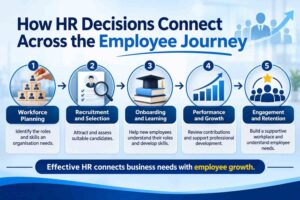
The exact syllabus depends on the university, programme structure and academic regulations. Some institutions introduce HR subjects in the first year, while others gradually increase specialisation subjects in later semesters.
The following subjects represent common areas of study.
A. Core Management Subjects
These subjects help students understand how different business departments work together.
- Principles of Management
Introduces management functions such as planning, organising, directing and controlling. Students learn how managers coordinate resources and work towards organisational goals.
- Organisational Behaviour
Explains how individuals and groups behave in workplace environments. Topics may include motivation, leadership, communication, teamwork, job satisfaction and organisational culture.
- Managerial Economics
Introduces economic concepts that influence business decisions, including demand, supply, market conditions and resource allocation.
- Financial Management
Helps students understand financial planning, budgeting, cost management and the financial information used in business decisions.
- Marketing Management
Introduces customer behaviour, marketing strategy, market research and the role of marketing in business growth.
- Business Communication
Develops professional writing, presentation, negotiation and workplace communication abilities.
B. Specialised Human Resource Subjects
These subjects focus on the responsibilities of HR departments and the decisions involved in managing employees.
- Human Resource Management
Introduces the role of HR in organisations. Students learn about workforce planning, recruitment, employee development, HR policies and the relationship between people management and business objectives.
- Recruitment and Selection
Explains how organisations identify vacancies, prepare job descriptions, attract applicants, screen candidates and coordinate selection processes.
- Training and Development
Focuses on identifying employee learning needs, planning training activities and evaluating development programmes.
- Performance Management
Introduces performance evaluation, goal setting, feedback systems and employee development planning.
- Compensation and Benefits Management
Explains salary structures, incentives, employee benefits, rewards and the principles used to develop compensation policies.
- Industrial Relations and Labour Laws
Introduces the relationship between employers, employees, trade unions and regulatory frameworks. Students develop an understanding of workplace regulations and employment-related responsibilities.
- Strategic Human Resource Management
Explains how HR policies and workforce planning support an organisation’s long-term business strategy.
- Human Resource Planning
Focuses on estimating workforce requirements, identifying skill gaps and planning recruitment or employee development activities.
- HR Analytics
Introduces the use of employee-related data to understand recruitment trends, employee turnover, performance patterns and workforce requirements.
- Organisational Development
Explores how organisations manage change, improve workplace processes and develop a culture that supports business objectives.
The All India Council for Technical Education (AICTE) includes areas such as recruitment and selection, training needs analysis, performance appraisal, compensation management, career development, HR information systems and labour laws in its AICTE Model Curriculum for MBA and PGDM programmes.
This is a useful reference for understanding the breadth of management and HR subjects. Individual universities may follow different syllabi and course arrangements.
MBA HR Subjects at a Glance
| Subject Area | What You Learn | Practical Application |
| Organisational Behaviour | Employee behaviour, motivation and teamwork | Understanding workplace relationships |
| Recruitment and Selection | Hiring processes and candidate evaluation | Coordinating recruitment |
| Training and Development | Employee learning and skill development | Planning training programmes |
| Performance Management | Goal setting and performance reviews | Supporting employee evaluation |
| Compensation Management | Salary structures and employee benefits | Understanding rewards and benefits |
| Industrial Relations | Employee relations and labour regulations | Supporting workplace policy compliance |
| HR Analytics | Employee data and workforce trends | Preparing HR reports |
| Strategic HRM | Connecting HR plans with business goals | Workforce planning and HR strategy |
How Do MBA HR Subjects Connect to Real Workplace Decisions?
A subject becomes more meaningful when you understand how it is used outside the classroom.
Consider a company that is experiencing high employee turnover. Instead of simply recruiting more people, the HR team needs to understand why employees are leaving.
Different MBA HR subjects help approach this situation from different angles.
- Organisational Behaviour helps understand employee motivation and workplace satisfaction.
- HR Analytics helps examine turnover patterns and employee-related data.
- Performance Management helps review whether employees receive clear goals and useful feedback.
- Compensation Management helps assess whether salary and benefit structures are appropriate.
- Training and Development helps identify whether employees need additional support to perform their roles.
- Strategic HRM helps connect employee retention plans with the organisation’s long-term objectives.
This is one of the important benefits of studying HR as a management specialisation. It encourages students to look at workplace challenges from multiple perspectives rather than treating each task as an isolated activity.
Specialisations and Electives You May Explore
Some MBA programmes offer electives that allow students to develop additional knowledge in selected areas.
Depending on the university, these may include:
- Talent management.
- Leadership and organisational development.
- International Human Resource Management.
- Employee engagement.
- Labour welfare and industrial relations.
- HR analytics.
- Learning and development.
- Compensation and rewards management.
- Diversity and inclusion.
- Strategic workforce planning.
For example, someone interested in recruitment may choose to build knowledge in talent acquisition and employer branding. A working professional involved in employee development may prefer learning and development or performance management.
Not every university offers all these electives. Check the current syllabus before selecting a programme.
B.Com graduates who want to explore career paths beyond traditional qualifications can check out these 10 best career options after B.Com without CA or MBA to discover alternative professional opportunities and career growth options.
Who Can Apply for an MBA in HR Management?
An MBA in HR is generally open to graduates from different academic backgrounds, subject to the university’s admission requirements.
You do not necessarily need a bachelor’s degree in Human Resources or Business Administration to pursue an MBA.
The programme may be suitable for:
- B.Com Graduates
Commerce graduates who understand accounting, business and organisational operations may explore HR as an alternative management specialisation.
- B.A. Graduates
Arts graduates with an interest in communication, people, psychology or organisational behaviour may find HR management worth exploring.
- B.Sc. Graduates
Science graduates who want to move towards business and people management can consider an MBA HR programme if they meet the admission criteria.
- BBA Graduates
Students who have studied business administration may already have introductory management knowledge and can explore advanced HR subjects.
- Working Professionals
Employees working in administration, recruitment, operations, customer service or team coordination may consider formal management education to develop broader business knowledge.
- Learners Returning After a Study Break
People who discontinued their education after graduation can also explore postgraduate management programmes. Their eligibility will depend on the university’s admission rules and accepted qualifications.
General Eligibility Requirements
Although requirements vary, many MBA programmes follow a general admission pattern:
- A recognised bachelor’s degree from an eligible university.
- Minimum qualifying marks or an equivalent grade, as specified by the institution.
- Entrance examination scores, where required.
- Additional documents or selection procedures, depending on the university.
Some institutions may offer admission through merit, while others may consider entrance tests, interviews or other selection criteria.
Before applying, read the latest admission notification and confirm the eligibility conditions for the exact programme.
Course Duration and Learning Modes: Regular, Distance or Online?
An MBA is commonly structured as a two-year postgraduate programme, although the duration and permitted completion period may vary according to the university and mode of study.
The learning mode is an important consideration, especially for people who are already employed or cannot attend regular classes.
1. Regular MBA
A regular MBA generally involves scheduled classroom sessions, academic activities, examinations and other campus-based requirements.
It may suit students who:
- Can attend classes regularly.
- Prefer direct interaction with faculty.
- Want campus-based academic activities.
- Can commit to a structured study timetable.
2. Distance MBA
A distance-learning programme is designed to allow students to study without attending daily classroom sessions.
Depending on the university, it may include printed or digital study materials, assignments, academic support and scheduled examinations.
It can be considered by:
- Working professionals.
- Learners managing family responsibilities.
- Students living away from campus.
- Graduates returning to education after a break.
However, the exact programme must be approved for the relevant mode and academic session.
3. Online MBA
An online MBA uses digital learning platforms to deliver academic content and support student engagement.
Depending on the programme, students may receive:
- Digital study materials.
- Recorded lectures.
- Live online sessions.
- Online assignments.
- Faculty interaction.
- Digital academic support.
- Scheduled assessments and examinations.
If you are exploring an online mba in bangalore, check the university’s recognition, programme approval, course structure, examination method and student support arrangements. Do not select a programme only because its website describes it as flexible.
What Should You Compare Before Choosing a Study Mode?
| Factor | Regular MBA | Distance MBA | Online MBA |
| Learning format | Campus-based | Self-study and supported learning | Digital learning platform |
| Daily attendance | Usually scheduled | Generally not required | Usually no daily campus attendance |
| Faculty interaction | Classroom-based | Depends on university support | Online sessions and academic support |
| Flexibility | More structured | Often flexible | Often flexible |
| Practical activities | Campus or programme-based | Depends on programme | Depends on programme |
| Suitable for | Full-time students | Learners needing study flexibility | Learners comfortable with digital study |
The table gives a broad comparison. Actual arrangements differ between universities, so always refer to the official programme details.
How to Evaluate Online and Distance MBA Options
When comparing online degree courses in Karnataka, students should look beyond course advertisements and examine the institution’s academic and regulatory details.
A useful checklist includes:
- University Recognition
Confirm that the degree-awarding university is recognised by the relevant authorities.
- Programme Approval
For online or distance education, verify the specific programme and admission session through the applicable official regulatory information.
- Curriculum
Check whether the programme includes relevant HR subjects such as recruitment, training, performance management, compensation and HR analytics.
- Faculty and Academic Support
Understand how students can interact with faculty, access study materials and receive help with academic questions.
- Assessment and Examinations
Review assignment requirements, examination arrangements and any project or practical components.
- Total Programme Cost
Compare tuition fees, registration charges, examination fees and other applicable expenses.
- Career Relevance
Consider whether the programme supports your learning objectives and the kind of HR responsibilities you want to pursue.
Students comparing the best online mba in india should use these factors instead of relying only on promotional rankings or claims. The right programme is one that meets your eligibility, learning needs and career expectations.
Career Opportunities After an MBA in HR Management
An MBA in HR can help graduates explore different people-management and organisational roles. The opportunities available depend on academic qualifications, practical experience, communication skills and the employer’s requirements.
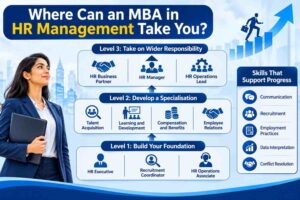
Some students begin with recruitment or HR support positions, while experienced professionals may move towards specialist or managerial responsibilities.
Here are some career directions to understand.
1. HR Executive
HR executives support the daily activities of an organisation’s Human Resources department.
Their work may include:
- Maintaining employee records.
- Supporting recruitment activities.
- Coordinating joining formalities.
- Assisting with attendance and leave records.
- Communicating HR policies.
- Supporting employee engagement activities.
This role can help fresh graduates understand how an HR department functions.
2. Talent Acquisition Specialist
Talent acquisition professionals focus on finding and hiring suitable candidates.
Their responsibilities may include preparing job descriptions, sourcing applicants, screening resumes, coordinating interviews and communicating with candidates.
People who enjoy communication, networking and evaluating candidate suitability may find this career direction interesting.
3. HR Generalist
An HR generalist works across different HR functions rather than focusing on only one area.
Depending on the organisation, the role may involve recruitment, onboarding, employee relations, training coordination, policy communication and performance management.
It can provide broad exposure to the HR function.
4. Learning and Development Executive
Learning and development professionals help employees improve their knowledge and workplace skills.
They may identify training requirements, coordinate learning sessions, maintain training records and collect feedback.
This role may suit people interested in employee development, teaching, communication and professional learning.
5. Employee Relations Executive
Employee relations professionals help maintain constructive relationships between employees and management.
Their responsibilities can include supporting grievance procedures, communicating workplace policies, coordinating employee discussions and assisting with conflict resolution.
The role requires maturity, confidentiality and a fair approach to workplace concerns.
6. Compensation and Benefits Analyst
This role focuses on salary structures, incentives, employee benefits and compensation-related information.
Professionals may assist with salary data, benefit administration, compensation reports and internal policy reviews.
Analytical ability and an understanding of financial information can be useful.
7. HR Operations Executive
HR operations professionals help maintain the systems and processes that support the employee lifecycle.
Their work may involve employee documentation, onboarding, HR databases, attendance processes, payroll coordination and employee records.
Knowledge of spreadsheets and HR information systems can be valuable.
8. HR Business Partner
An HR business partner works with business leaders and department managers to address workforce-related requirements.
The role may involve workforce planning, organisational development, employee engagement and supporting business changes.
It generally requires practical HR experience and a strong understanding of business operations.
9. HR Analytics Professional
HR analytics professionals use employee-related information to help organisations understand workforce trends.
They may analyse recruitment data, employee turnover, attendance, training participation and performance-related information.
Knowledge of spreadsheets, reporting tools and data interpretation can support this career direction.
10. HR Manager
HR managers oversee HR activities and help implement people-management policies across an organisation.
Their responsibilities may include managing HR teams, workforce planning, recruitment strategy, employee development, performance systems and policy implementation.
Most managerial positions expect relevant professional experience in addition to academic qualifications.
Career Roles at a Glance
| Job Role | Main Area of Work | Useful Skills |
| HR Executive | Daily HR activities and employee records | Organisation and communication |
| Talent Acquisition Specialist | Recruitment and selection | Interviewing and candidate assessment |
| HR Generalist | Multiple HR functions | Coordination and problem-solving |
| Learning and Development Executive | Employee training | Planning and presentation |
| Employee Relations Executive | Workplace relationships | Listening and conflict resolution |
| Compensation Analyst | Salary and benefits information | Analytical and numerical skills |
| HR Operations Executive | HR processes and systems | Documentation and digital skills |
| HR Business Partner | Business and workforce planning | Strategic thinking and communication |
| HR Analytics Professional | Employee data and reporting | Data interpretation and reporting |
| HR Manager | HR team and function management | Leadership and experience |
A qualification may help you develop the knowledge needed for these roles, but it does not guarantee a particular designation. Employers may also consider work experience, practical skills, industry exposure and recruitment requirements.
Which Industries Offer HR Career Opportunities?
Human Resource professionals are needed in organisations of different sizes and across several industries.
The nature of HR work may change according to the workforce, business model and operating environment.
- Information Technology
IT companies recruit technical and non-technical employees, manage workforce development and support employee engagement. HR professionals may work in recruitment, HR operations, learning and development or HR business partnering.
- Banking and Financial Services
Banks and financial organisations require employees with specialised knowledge, customer service skills and regulatory awareness. HR teams support recruitment, training, performance management and workforce administration.
- Healthcare
Hospitals and healthcare organisations employ medical, administrative and support staff. HR professionals may coordinate recruitment, onboarding, training and employee documentation.
- Manufacturing
Manufacturing organisations may have office employees, technical teams and factory-based workers. HR responsibilities can include workforce planning, employee relations, training and compliance coordination.
- Education
Schools, colleges, universities and educational companies recruit teaching and non-teaching employees. HR teams support recruitment, employee records, training and workplace administration.
- Retail and E-commerce
Retail businesses often manage large teams across stores, warehouses and corporate offices. Recruitment planning, onboarding, scheduling and employee engagement are important activities.
- Hospitality and Tourism
Hotels, travel companies and hospitality businesses depend on customer-facing teams. HR professionals support recruitment, service training, employee retention and workforce coordination.
- Consulting and Professional Services
Consulting firms and professional service organisations recruit employees with specialised knowledge. HR professionals may work in talent acquisition, performance systems, learning and development and organisational planning.
This variety means that HR is not limited to one type of workplace. Students can explore industries according to their interests and the skills they develop.
Salary Expectations After an MBA in HR Management
Salary is an important part of career planning, but it should be understood realistically.
An MBA qualification alone does not determine how much a person will earn. Salary depends on the job role, employer, location, industry, previous experience, practical skills and responsibilities.
The following figures are broad illustrative estimates for career planning in India. They are not official pay scales, verified offers or guaranteed salary outcomes.
| Career Stage / Role | Indicative Annual Salary Range |
| Entry-level HR Executive | ₹2.5–4 lakh |
| Talent Acquisition Executive | ₹2.5–4.5 lakh |
| HR Operations Executive | ₹2.5–4.5 lakh |
| Learning and Development Executive | ₹3–5 lakh |
| HR Generalist with experience | ₹4–7 lakh |
| Compensation and Benefits Specialist | ₹4–8 lakh |
| HR Business Partner with experience | ₹6–12 lakh |
| HR Manager with relevant experience | ₹7–15 lakh or more |
Actual compensation may fall outside these ranges. Smaller organisations, larger companies, different cities and specialised industries may offer different salary structures.
What Can Influence an HR Professional’s Salary?
- Work Experience
Practical experience can make a significant difference. Someone who has handled recruitment, employee relations or HR operations may be considered for responsibilities beyond an entry-level position.
- Specialised Knowledge
Knowledge of HR analytics, compensation management, talent acquisition or learning and development may help professionals pursue specialised roles.
- Industry
Different industries have different workforce requirements and compensation practices. An HR professional in a large technology company may have a different salary structure from someone working in a small educational institution.
- Digital Skills
Familiarity with HR software, spreadsheets, reporting tools and data dashboards can support productivity and professional suitability.
- Communication and Leadership
Professionals who can coordinate teams, manage workplace discussions and communicate effectively may be considered for roles involving greater responsibility.
- Location and Employer Size
Salary levels can differ between cities, industries and organisations. The size of the company and complexity of the HR function can also influence compensation.
Instead of selecting an MBA programme based only on expected salary, consider the knowledge, skills and career direction it can help you develop.
Future Scope of Human Resource Management
The HR profession is changing as organisations adopt new technologies, introduce flexible work arrangements and respond to changing employee expectations.
Traditional HR responsibilities remain important, but many organisations now expect HR teams to contribute to business planning, employee experience and workforce development.
Here are some developments shaping the field.
1. HR Analytics and Data-Based Decisions
Organisations collect information about recruitment, employee turnover, attendance, performance and training.
HR analytics helps professionals examine this information and identify patterns. For example, a company may use employee turnover data to understand which departments need better retention strategies.
Professionals who can interpret information and communicate useful findings may find this skill increasingly valuable.
2. Digital HR Systems
Many HR activities are supported by digital platforms.
Recruitment systems, employee databases, payroll software, attendance tools and learning management platforms help organisations coordinate processes.
HR professionals should be comfortable learning relevant digital systems rather than relying only on manual documentation.
3. Artificial Intelligence in Recruitment and HR
Artificial intelligence is influencing activities such as resume screening, candidate matching, employee support and HR reporting.
However, technology must be used responsibly. Human judgement remains important when evaluating candidates, handling sensitive employee concerns and making decisions that affect people.
Understanding both the opportunities and limitations of technology can help future HR professionals adapt.
4. Employee Well-Being and Engagement
Organisations increasingly recognise that employee experience influences workplace culture and retention.
HR teams may support engagement initiatives, employee feedback systems, well-being activities and policies that encourage a healthy work environment.
5. Flexible and Hybrid Workplaces
Many organisations use a combination of office-based and remote work arrangements.
This creates HR responsibilities related to communication, performance expectations, employee engagement, digital collaboration and workplace policies.
6. Diversity and Inclusion
Organisations bring together employees with different backgrounds, experiences and working styles.
HR professionals can support fair recruitment, inclusive workplace practices and respectful communication.
7. Labour and Employment Compliance
HR teams must understand the employment-related requirements that apply to their organisations and coordinate with legal or compliance specialists when necessary.
India’s labour framework is also evolving. The Ministry of Labour and Employment has published information on the implementation of the four Labour Codes, covering wages, industrial relations, social security, and occupational safety and working conditions. HR learners can refer to the official Government of India’s Labour Codes update to understand why awareness of employment regulations matters in workforce management.
The future of HR will involve a combination of people skills, management knowledge, technology awareness and responsible decision-making.
How to Choose the Right MBA HR Programme?
After understanding the subjects and career options, the next step is selecting a programme that suits your educational background and professional plans.
A programme should not be chosen only because it has an attractive advertisement or a convenient admission process.
Use the following points to evaluate your options.
- Confirm University Recognition
Check whether the university awarding the degree is recognised by the appropriate authorities.
- Verify the Programme and Learning Mode
For online and distance programmes, confirm the programme’s approval for the relevant academic session. Do not assume that approval for one programme or mode automatically applies to another.
- Review the HR Curriculum
Look for subjects that match your learning interests, such as recruitment, performance management, employee relations, compensation, training and HR analytics.
- Understand the Learning Platform
If you are considering online study, explore the learning platform, recorded lectures, live sessions, study materials and faculty support.
- Compare the Complete Fee Structure
Check tuition fees, registration charges, examination fees and other applicable costs. Understand the payment schedule before admission.
- Check Assessment Requirements
Review the examination pattern, assignments, projects and any other academic requirements.
- Evaluate Student Support
Understand how students can receive academic guidance, resolve technical issues and get information about examinations and programme procedures.
- Match the Programme to Your Career Goal
A graduate interested in recruitment may want to focus on talent acquisition and employee assessment. A working professional in administration may prefer broader knowledge of HR operations and organisational management.
- Understand Career Support Carefully
Check what the institution actually provides, such as academic guidance, career counselling, skill development activities or placement assistance. Do not treat promotional employment claims as guaranteed outcomes.
Students comparing online degree colleges in Bangalore should apply the same checks to every institution they consider.
Similarly, when reviewing affordable online degrees, compare the overall programme value, recognition, academic support and suitability rather than selecting the lowest advertised fee.
Can Working Professionals Pursue an MBA in HR?
Yes. Many graduates consider an MBA in HR while continuing their employment, provided they meet the programme’s admission requirements and can manage its academic commitments.
Working professionals may find the specialisation relevant if their current responsibilities involve:
- Recruitment coordination.
- Administration.
- Team supervision.
- Employee documentation.
- Training coordination.
- Customer service management.
- Operations and workforce scheduling.
For example, an employee working in administration may already handle attendance records, employee communication and joining formalities. Studying HR management can help them understand the broader principles behind these activities.
However, a degree should be supported by practical learning. Professionals can build experience by taking part in employee onboarding, training coordination, recruitment support or HR reporting projects where appropriate.
If you are comparing an online mba in Bangalore with other study options, consider your work schedule, preferred learning format, academic support and the programme’s official recognition.
How Can Fresh Graduates and Career Returners Prepare for HR?
Not every learner begins an MBA with workplace experience. Fresh graduates and people returning to education after a break can still prepare for the field through practical activities.
For Fresh Graduates
- Learn basic business communication.
- Practise preparing professional resumes and job descriptions.
- Understand recruitment and interview processes.
- Improve spreadsheet and presentation skills.
- Participate in academic projects involving teamwork.
- Explore internships or entry-level HR support opportunities.
For Working Professionals
- Identify HR-related responsibilities in your current role.
- Learn how employee records and workplace policies are managed.
- Develop reporting and coordination skills.
- Explore HR software and digital tools.
- Connect management concepts with real workplace situations.
For Learners Returning After a Break
- Review your previous graduation qualification.
- Check current MBA admission requirements.
- Choose a learning mode that fits your responsibilities.
- Refresh your communication and digital skills.
- Create a realistic study schedule.
The goal is not to know everything before admission. It is to begin with a clear learning plan and build confidence through consistent practice.
Explore Management Education with Sophia Online Degree College Bangalore
Choosing a postgraduate programme is an important decision, especially when you are balancing education with employment, family responsibilities or other commitments.
Sophia Online Degree College Bangalore supports learners who want to explore higher education opportunities and make informed decisions about their academic journey.
If you are interested in Human Resource Management, begin by understanding the qualifications you need, the subjects you want to study and the type of career you hope to pursue.
Before selecting a programme, consider:
- Your Educational Background: Check whether your graduation qualification meets the admission requirements.
- Your Career Interest: Decide whether you are more interested in recruitment, employee development, HR operations or broader management responsibilities.
- Your Preferred Learning Mode: Compare regular, distance and online options according to your schedule.
- Programme Recognition: Verify the awarding university and the specific programme’s approval.
- Course Structure: Review the syllabus, assessments, academic support and total fees.
If you are exploring online degree courses in bangalore, take time to compare the available options and understand what each programme offers.
You can explore SODC to learn more about educational opportunities and admission guidance. Sophia Online Degree College Bangalore encourages prospective learners to make academic decisions based on their eligibility, interests and long-term goals.
Conclusion: Build Your Future in People and Business Management
Human Resource Management brings together people, workplace processes and business objectives. An MBA in HR can help learners understand how organisations recruit employees, develop talent, manage performance and create productive working environments.
The programme generally covers core management subjects alongside specialised areas such as recruitment, training and development, compensation management, industrial relations, HR analytics and strategic HRM.
These subjects can support different career directions, including HR executive, talent acquisition specialist, HR generalist, learning and development executive, HR operations professional and, with relevant experience, HR manager or HR business partner.
However, a qualification is only one part of career preparation. Communication, problem-solving, digital literacy, analytical thinking and practical workplace exposure also matter.
Whether you are a recent graduate, a working professional or someone returning to education, take time to compare programme recognition, eligibility, learning mode, curriculum and fees before applying.
The right academic choice should help you build useful knowledge while supporting the professional direction you want to pursue.
Take the Next Step Towards Your Management Education!
Interested in building your knowledge of Human Resource Management? Whether you are a graduate exploring postgraduate education, a working professional planning career growth or a learner returning to studies, choosing the right programme is an important first step.
Sophia Online Degree College Bangalore can help you explore educational opportunities and understand the next steps in your academic journey.
Frequently Asked Questions About MBA in HR Management
- What is an MBA in HR Management?
An MBA in HR Management is a postgraduate programme that focuses on managing employees and developing people-related functions within organisations. It generally covers recruitment, training, performance management, compensation, employee relations and strategic HR.
- What are the main subjects in an MBA HR programme?
Common subjects include Human Resource Management, Organisational Behaviour, Recruitment and Selection, Training and Development, Performance Management, Compensation Management, Industrial Relations, HR Analytics and Strategic HRM. The exact syllabus varies by university.
- Can I pursue an MBA in HR after B.A., B.Com or B.Sc.?
Yes. Graduates from arts, commerce, science and other recognised disciplines may be eligible. However, admission depends on the university’s minimum marks, degree requirements and selection process.
- Is work experience compulsory for an MBA in HR?
Not always. Many MBA programmes accept fresh graduates, while some institutions or specific programmes may have additional requirements. Check the admission rules before applying.
- What skills are important for an HR professional?
Communication, interpersonal skills, organisation, problem-solving, conflict resolution, confidentiality, analytical thinking and digital literacy are useful. Leadership and strategic thinking become increasingly important as professionals move into senior roles.
- Can I study MBA HR through online or distance education?
Some universities offer MBA programmes through online or Open and Distance Learning modes. Students should verify the university and the specific programme’s approval for the relevant academic session before enrolling.
- What career options are available after an MBA in HR?
Possible career options include HR Executive, Talent Acquisition Specialist, HR Generalist, Learning and Development Executive, HR Operations Executive, Employee Relations Executive and HR Analytics Professional. Managerial positions generally require relevant experience.
- What is the salary after an MBA in HR in India?
Salary depends on the employer, industry, location, job role, experience and practical skills. Entry-level HR roles may offer different compensation from specialist or managerial positions. Treat online salary ranges as estimates rather than guaranteed outcomes.
- Is an MBA in HR a good option for working professionals?
It can be a useful option for working professionals interested in recruitment, administration, employee management, training or organisational development. The programme’s schedule and learning mode should fit the learner’s work commitments.
- What is the difference between an MBA in HR and a general MBA?
A general MBA provides broader exposure to management areas such as marketing, finance, operations and strategy. An MBA in HR includes core management subjects while giving additional attention to recruitment, employee development, compensation, workplace relations and HR strategy.
- How do I choose the right online MBA programme?
Check university recognition, programme approval, curriculum, faculty support, learning platform, examination arrangements, fees and student services. Compare the official details of each programme before making an admission decision.
- Does an MBA in HR guarantee an HR manager job?
No. An MBA can provide relevant management knowledge, but a managerial position usually depends on work experience, practical skills, employer requirements and professional performance. Many graduates begin in executive or specialist roles and progress with experience.
Visit SODC to learn more about available programmes and admission guidance.
Have questions about eligibility, course options or learning modes? Contact us today and get the guidance you need to plan your next step.