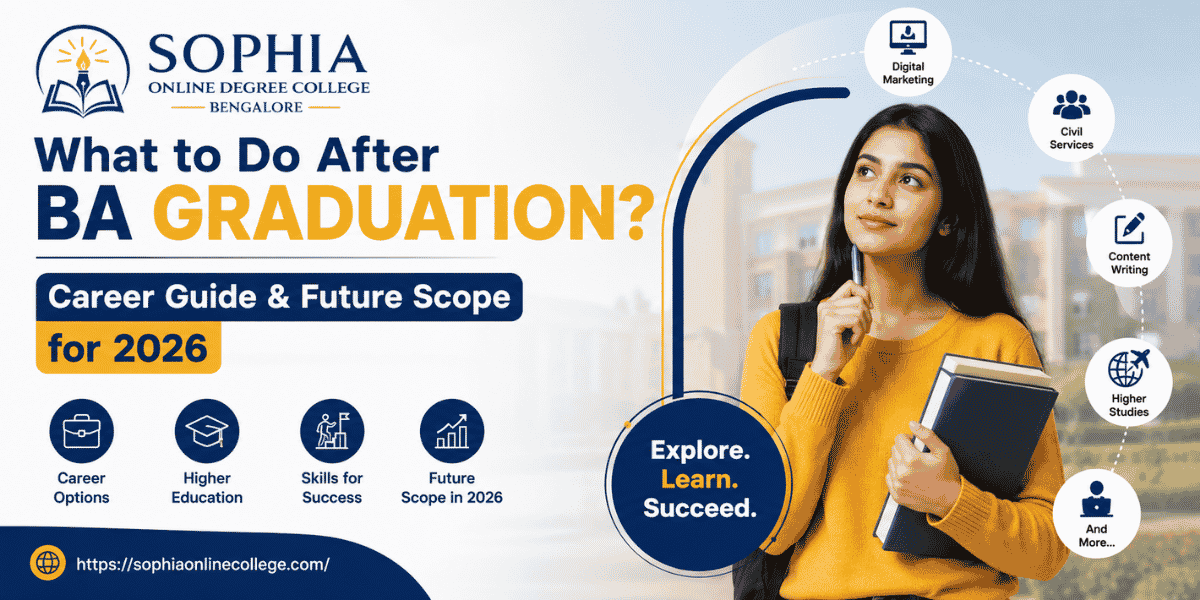
What to Do After BA Graduation is one of the most common questions students ask after completing their bachelor’s degree. While many graduates worry about limited career opportunities, the reality is quite different in 2026. A BA degree opens doors to careers in business, education, government, media, digital marketing, human resources, public administration, content creation, and much more. Understanding What to Do After BA Graduation is about identifying your interests, developing practical skills, and choosing the right career path or higher education program. Whether you plan to pursue higher studies or start working immediately, this guide will help you explore the best opportunities and build a successful future.
Why BA Graduates Have More Career Opportunities Than Ever?
Gone are the days when a Bachelor of Arts degree was associated with only teaching or government jobs. Today, employers value graduates who possess strong communication, analytical thinking, creativity, and problem-solving skills—qualities that BA students naturally develop during their academic journey.
The digital economy has created opportunities across multiple industries where subject knowledge combined with modern skills is more important than ever.
Some of the fastest-growing sectors hiring BA graduates include:
- Digital Marketing
- Human Resources
- Business Development
- Customer Success
- Content Marketing
- Public Relations
- Journalism
- Corporate Communications
- Civil Services
- Education Technology
- Social Work
- Non-Governmental Organizations (NGOs)
Learning What to Do After BA Graduation means understanding that your career is no longer limited to traditional roles. Upskilling through certifications, internships, and practical experience can significantly expand your career options.
BA Course Subjects
A Bachelor of Arts program provides students with a broad understanding of humanities, social sciences, languages, and communication. These subjects build critical thinking, research abilities, and interpersonal skills that are valuable across industries.
Some of the most common BA Course Subjects include:
- English Literature
- History
- Political Science
- Economics
- Sociology
- Psychology
- Geography
- Public Administration
- Philosophy
- Journalism and Mass Communication
- Hindi or Regional Languages
These subjects help students develop analytical thinking, writing, communication, and decision-making skills. Employers increasingly value these competencies because they contribute to leadership, teamwork, customer interaction, and strategic planning.
Graduates from a BA correspondence college in Bangalore also gain similar academic knowledge while benefiting from flexible learning options that support both students and working professionals.
Best Career Options After BA Graduation
If you’re wondering What to Do After BA Graduation, there are numerous career paths available depending on your interests, skills, and future goals.
1. Human Resource Executive
Human Resources continues to be one of the most popular career choices for BA graduates.
Responsibilities include:
- Recruitment
- Employee engagement
- Payroll coordination
- Performance management
- Training and development
Fresh graduates can start as HR Executives and gradually move into HR Business Partner or HR Manager roles.
2. Digital Marketing Executive
Digital marketing offers exciting opportunities for BA graduates with strong communication and creativity.
Popular roles include:
- SEO Executive
- Content Strategist
- Social Media Executive
- Email Marketing Specialist
- Performance Marketing Associate
Learning AI-powered marketing tools further enhances career growth.
3. Content Writer
Content creation remains one of the fastest-growing professions.
BA graduates can work as:
- Website Content Writer
- Copywriter
- Technical Writer
- Script Writer
- SEO Content Specialist
This career offers excellent freelance and remote work opportunities.
4. Public Relations Executive
Organizations require professionals who can manage brand reputation and corporate communication.
Responsibilities include:
- Press releases
- Media communication
- Event coordination
- Crisis management
- Public image building
5. Customer Success Executive
Technology companies increasingly hire graduates who can manage customer relationships and improve user experience.
Strong communication skills make BA graduates suitable for these roles.
6. Government Jobs
Many BA graduates prepare for competitive examinations such as:
- UPSC Civil Services
- SSC
- Banking
- State PSC
- Railways
- Defence Services
Government careers offer job stability, career progression, and attractive benefits.
Understanding What to Do After BA Graduation involves evaluating both private and government career opportunities based on your interests.
Best Career Options After BA Graduation
| Career Option | Average Starting Salary | Growth Potential |
| Human Resource Executive | ₹3–5 LPA | High |
| Digital Marketing Executive | ₹3–6 LPA | High |
| Content Writer | ₹3–6 LPA | Excellent |
| Public Relations Executive | ₹3–5 LPA | High |
| Customer Success Executive | ₹4–7 LPA | Excellent |
| Government Services | As per Government Scale | Very High |
Higher Studies After BA
Many graduates choose higher education to specialize in their field and improve long-term career prospects.
Some of the most popular options include:
Master of Arts (MA)
An MA allows students to deepen their knowledge in subjects such as:
- English
- Psychology
- Sociology
- Political Science
- History
- Economics
Studying through an MA correspondence college in India offers flexibility for students who wish to continue working while pursuing postgraduate education.
Master of Business Administration (MBA)
An MBA is an excellent choice for BA graduates interested in management, leadership, marketing, finance, or entrepreneurship.
Students exploring management distance education in Bangalore can pursue flexible MBA programs that combine academic learning with practical business knowledge.
Bachelor of Education (B.Ed.)
Students interested in teaching careers often pursue B.Ed. after completing BA.
This qualification prepares candidates for school teaching positions and educational leadership roles.
Law (LLB)
A BA followed by an LLB opens opportunities in:
- Corporate Law
- Civil Law
- Criminal Law
- Legal Consulting
- Judiciary
Professional Certifications
Modern employers also value certifications in:
- Digital Marketing
- Business Analytics
- HR Management
- AI Tools
- Project Management
- Communication Skills
Choosing the right higher education path is one of the most important decisions when deciding What to Do After BA Graduation.
Best Courses After BA Graduation
Choosing the right course after completing a BA can significantly improve your career opportunities and earning potential. If you’re wondering What to Do After BA Graduation, selecting a program that aligns with your interests, career goals, and industry demand is one of the smartest decisions you can make. In 2026, employers increasingly value candidates who combine academic qualifications with practical skills and professional certifications.
Here are some of the best courses to consider:
1. Master of Business Administration (MBA)
An MBA remains one of the most popular choices for BA graduates.
Specializations include:
- Marketing
- Finance
- Human Resources
- Business Analytics
- Operations
- International Business
Students looking for flexibility can explore management distance education in Bangalore, allowing them to continue learning while gaining work experience.
2. Master of Arts (MA)
An MA helps students specialize in subjects such as:
- English
- Psychology
- Sociology
- Political Science
- Economics
- History
This option is ideal for careers in education, research, civil services, and academia.
3. Bachelor of Education (B.Ed.)
If teaching is your career goal, B.Ed. provides the required professional qualification for school education.
4. Law (LLB)
Many BA graduates pursue LLB to enter corporate law, litigation, legal consulting, or judicial services.
5. Professional Certifications
Short-term certifications can improve employability quickly.
Popular options include:
- Digital Marketing
- Data Analytics
- Human Resource Management
- Artificial Intelligence Tools
- Project Management
- Content Marketing
- Business Communication
Understanding What to Do After BA Graduation also means continuously learning new skills that employers actively seek.
Skills Every BA Graduate Should Learn in 2026
While academic knowledge is valuable, employers increasingly hire candidates with practical workplace skills.
Here are the most important competencies:
Communication Skills
Clear communication improves workplace collaboration, presentations, interviews, and leadership abilities.
Digital Skills
Basic knowledge of:
- Microsoft Office
- Google Workspace
- AI tools
- CRM software
has become essential.
AI Literacy
Modern workplaces increasingly use AI-powered platforms.
Learning tools like ChatGPT, Microsoft Copilot, and Google Gemini can improve productivity.
Critical Thinking
Employers value graduates who can analyze situations and make informed decisions.
Leadership
Leadership skills help graduates progress into management positions faster.
Time Management
Managing multiple responsibilities efficiently increases workplace performance.
Problem Solving
Organizations seek professionals capable of finding practical solutions to business challenges.
These skills significantly strengthen your career prospects when planning What to Do After BA Graduation.
Emerging Careers for BA Graduates in 2026
Technology has transformed career opportunities for arts graduates.
Some of the fastest-growing professions include:
AI Content Specialist
Creates AI-assisted content while ensuring originality and quality.
Customer Success Manager
Helps businesses improve customer satisfaction and retention.
HR Analytics Executive
Uses employee data to improve recruitment and workforce management.
Digital Marketing Specialist
Combines creativity with analytics to grow online businesses.
Public Policy Analyst
Works with governments and research organizations to evaluate public policies.
Corporate Communications Executive
Manages internal and external communication for organizations.
Learning & Development Executive
Designs employee training and professional development programs.
ESG Coordinator
Supports environmental, social, and governance initiatives within companies.
These careers demonstrate that What to Do After BA Graduation extends far beyond traditional employment options.
BA Degree + Skills vs Career Opportunities
| BA Qualification + Additional Skill | Career Opportunity |
| BA + Digital Marketing | Digital Marketing Executive |
| BA + HR Certification | HR Executive |
| BA + AI Tools | AI Content Specialist |
| BA + MBA | Business Manager |
| BA + Public Speaking | Corporate Trainer |
| BA + Data Analytics | Business Analyst |
Salary After BA Graduation in India (2026)
Salary depends on your skills, experience, certifications, and industry.
Approximate salary ranges include:
| Experience | Average Salary |
| Fresh Graduate | ₹3–5 LPA |
| 2–5 Years | ₹5–10 LPA |
| Mid-Level Professional | ₹10–18 LPA |
| Senior Professional | ₹18–30+ LPA |
High-paying sectors include:
- Digital Marketing
- Human Resources
- Consulting
- Business Development
- Corporate Communications
- Banking
- Information Technology
- Public Relations
Graduates who continuously improve their professional skills generally experience faster salary growth.
Step-by-Step Career Roadmap After BA
Planning your career becomes easier when you follow a structured approach.
Step 1: Identify Your Interests
Choose between:
- Private sector
- Government jobs
- Higher studies
- Entrepreneurship
Step 2: Improve Your Skills
Focus on:
- Communication
- AI tools
- Digital skills
- Leadership
- Excel
- Public speaking
Step 3: Complete Certifications
Industry-recognized certifications increase employability.
Step 4: Build Practical Experience
Gain experience through:
- Internships
- Freelancing
- Volunteer work
- Live projects
Step 5: Build Your Professional Profile
Create:
- LinkedIn profile
- Updated resume
- Portfolio
- Professional network
Step 6: Continue Learning
Students looking for flexible education can explore programs through a trusted Correspondence college in India. Flexible learning allows graduates to balance work and education while developing industry-relevant skills.
Likewise, many learners prefer distance education in Bangalore because it offers accessibility and convenience without interrupting their careers. For students who value flexible academic progression, Traditional distance education in Bangalore continues to provide opportunities to pursue higher education while maintaining personal and professional commitments.
Following this roadmap helps graduates confidently answer the question, What to Do After BA Graduation, and prepare for long-term career success.
Common Mistakes BA Graduates Should Avoid
Many students make avoidable mistakes immediately after completing their degree, which can delay career growth. If you’re deciding What to Do After BA Graduation, avoiding these mistakes can help you build a stronger professional future.
1. Waiting Too Long to Make Career Decisions
Some graduates spend months deciding what to do next without gaining experience or learning new skills. Start exploring internships, certifications, or higher education immediately after graduation.
2. Ignoring Skill Development
A BA degree provides a strong academic foundation, but employers also expect practical skills like communication, AI tools, digital marketing, leadership, and analytical thinking.
3. Depending Only on Government Jobs
Preparing for competitive exams is an excellent choice, but relying solely on one career option can be risky. Explore private sector jobs, freelancing, and higher education simultaneously.
4. Not Building a Professional Network
Networking through LinkedIn, alumni groups, seminars, and internships often leads to better job opportunities than applying through job portals alone.
5. Avoiding Practical Experience
Internships, volunteer work, freelance projects, and certifications help you gain real-world exposure, making your resume more attractive to recruiters.
6. Not Learning AI and Digital Tools
Modern organizations increasingly use AI-powered software for communication, analytics, recruitment, and marketing. Understanding these technologies makes graduates more employable.
Avoiding these common mistakes will make it easier to decide What to Do After BA Graduation and prepare for long-term career success.
Why Choose Sophia Online College for Higher Education?
Choosing the right institution plays a significant role in shaping your career after graduation. Sophia Online College offers flexible learning opportunities for students who want to continue their education while balancing work, family responsibilities, or competitive exam preparation.
Whether you’re planning to pursue an MA, MBA, or other professional qualifications, Sophia Online College provides programs designed to support career growth and lifelong learning. Students looking for a BA correspondence college in Bangalore or an MA correspondence college in India can explore flexible academic options that allow them to continue their education without compromising their professional commitments.
Learners interested in management distance education in Bangalore can build business and leadership skills that improve career prospects across multiple industries. Similarly, students considering distance education in Bangalore or Traditional distance education in Bangalore benefit from flexible learning models that make higher education more accessible.
As a trusted Correspondence college in India, Sophia Online College focuses on helping students combine academic qualifications with practical skills, enabling them to confidently prepare for evolving job markets and future career opportunities.
Conclusion
Completing a BA degree is not the end of your academic journey—it is the beginning of countless career possibilities. From higher education and competitive examinations to corporate careers, entrepreneurship, digital marketing, human resources, public administration, and emerging AI-driven professions, BA graduates have more opportunities today than ever before.
Understanding What to Do After BA Graduation requires identifying your interests, developing industry-relevant skills, gaining practical experience, and continuously upgrading your knowledge. Whether you choose higher studies, government services, or private-sector employment, consistent learning and adaptability will help you achieve long-term career success.
If you’re still wondering What to Do After BA Graduation, remember that the right combination of education, skills, certifications, and practical experience can help you build a rewarding and future-ready career in 2026 and beyond.
Build Your Future After BA with Sophia Online College
Looking for the best higher education options after completing your BA?
Sophia Online College offers flexible programs designed for students and working professionals who want to continue their education while advancing their careers. Explore opportunities through BA correspondence college in Bangalore, MA correspondence college in India, management distance education in Bangalore, distance education in Bangalore, and other career-focused programs that help you stay competitive in today’s evolving job market.
Contact Sophia Online College today and take the next step toward a successful future after your BA graduation.
FAQs
1. What to Do After BA Graduation?
After completing a Bachelor of Arts degree, students have numerous opportunities to build successful careers based on their interests, skills, and long-term goals. Popular options include pursuing higher education like MA, MBA, B.Ed., or LLB, preparing for competitive government exams, or entering private-sector industries such as digital marketing, human resources, public relations, journalism, and corporate communications. Developing practical skills, earning industry-recognized certifications, and gaining internship experience can further improve employability. If you’re wondering What to Do After BA Graduation, start by identifying your strengths, exploring career trends, and continuously upgrading your knowledge to stay competitive in today’s evolving job market.
2. Which course is best after BA?
The ideal course after BA depends on your career aspirations and personal interests. Students aiming for managerial positions often pursue an MBA, while those interested in academics or teaching may choose an MA or B.Ed. Other excellent options include LLB, Digital Marketing, Business Analytics, Human Resource Management, Data Analytics, and Artificial Intelligence certifications. These programs help graduates develop specialized expertise and improve career opportunities. When deciding What to Do After BA Graduation, choose a course that aligns with current industry demands and your long-term professional goals. Combining higher education with practical skills significantly increases employability and salary potential.
3. Is MBA a good option after BA?
Yes, pursuing an MBA after BA is one of the most rewarding career decisions for graduates interested in leadership, business management, and corporate careers. MBA programs develop skills in marketing, finance, operations, business analytics, human resources, and entrepreneurship. Graduates often secure managerial positions with attractive salary packages across multinational companies, startups, consulting firms, and financial institutions. Students exploring What to Do After BA Graduation frequently choose MBA because it enhances decision-making abilities, leadership qualities, and business knowledge while opening doors to higher-paying jobs and faster career progression in both national and international organizations.
4. What are the highest-paying jobs after BA?
BA graduates can pursue several high-paying careers across public and private sectors. Some of the top options include Human Resource Manager, Digital Marketing Manager, Business Development Manager, Public Relations Specialist, Corporate Communications Manager, Business Consultant, Banking Professional, Civil Services Officer, Content Strategist, Customer Success Manager, and Media Professional. Salaries vary depending on experience, industry, certifications, and skill levels. Professionals who continuously upgrade their expertise through certifications and practical projects generally experience faster career growth. Understanding What to Do After BA Graduation also means identifying industries where communication, leadership, and digital skills are highly valued by employers.
5. Can BA students get government jobs?
Absolutely. BA graduates are eligible for a wide range of government examinations and public sector careers. Popular opportunities include UPSC Civil Services, SSC CGL, Banking Exams (IBPS & SBI), State Public Service Commission examinations, Railways, Defence Services, Intelligence Bureau, and various administrative positions. Government jobs offer excellent job security, structured career growth, pension benefits, and attractive salaries. Many graduates preparing for competitive exams also pursue certifications or higher education simultaneously to keep multiple career options available. Understanding What to Do After BA Graduation involves balancing preparation for government services with continuous skill development for broader career opportunities.
6. Which skills should BA graduates learn in 2026?
To remain competitive in today’s job market, BA graduates should focus on developing both technical and interpersonal skills. Essential competencies include communication, critical thinking, leadership, digital marketing, AI literacy, business communication, Microsoft Excel, data analysis, presentation skills, problem-solving, project management, and public speaking. Knowledge of AI-powered productivity tools and basic business analytics can further strengthen employability. Employers increasingly seek graduates who can combine academic knowledge with practical workplace capabilities. Learning these future-ready skills helps students confidently answer What to Do After BA Graduation while improving their chances of securing rewarding careers across multiple industries.
7. Is distance education a good option after BA?
Yes, distance education is an excellent choice for graduates who want to continue their studies while working, preparing for competitive exams, or managing personal responsibilities. Flexible learning allows students to pursue programs such as MA, MBA, B.Ed., or professional certifications without attending regular classes. It offers affordability, accessibility, and the convenience of learning at one’s own pace. Many recognized institutions provide quality education through online and correspondence modes. Students exploring What to Do After BA Graduation often choose distance education because it helps them improve qualifications, gain practical experience, and maintain a healthy balance between education and career development.
8. What is the future scope after BA graduation?
The future scope after BA graduation is brighter than ever due to expanding opportunities across government services, corporate organizations, education, media, digital marketing, public relations, business consulting, human resources, customer success, content creation, and emerging AI-driven industries. Employers increasingly appreciate graduates with strong communication, analytical thinking, creativity, and leadership abilities. By continuously upgrading their skills through certifications, internships, and higher education, BA graduates can remain competitive in the evolving job market. Understanding What to Do After BA Graduation enables students to make informed career decisions that lead to long-term professional growth, financial stability, and global career opportunities.