
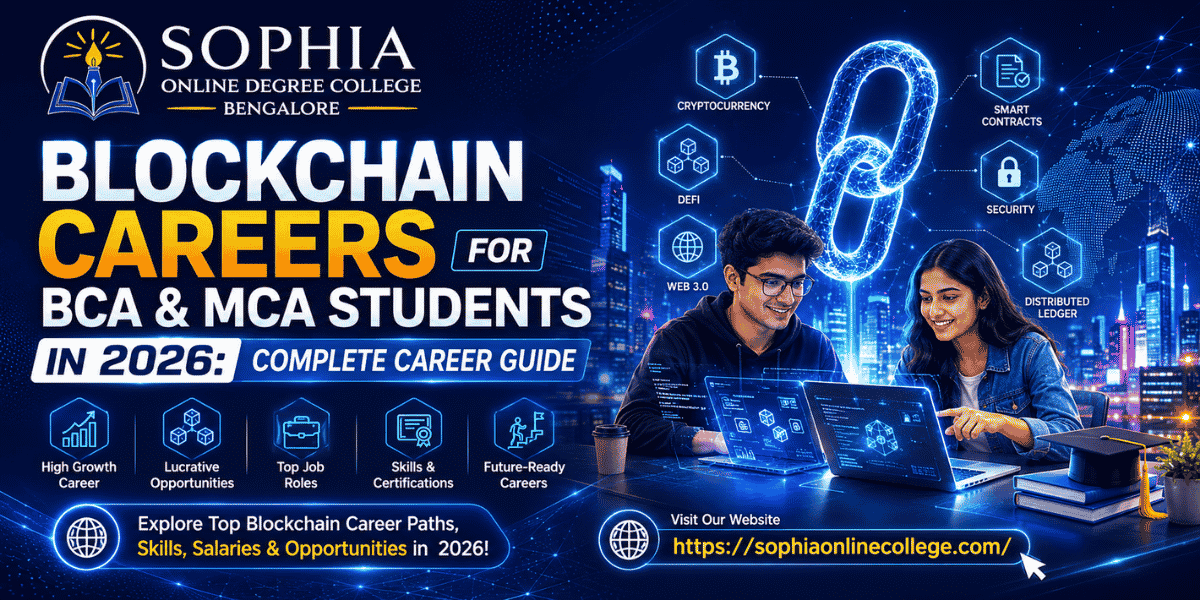
Blockchain Careers for BCA and MCA graduates are becoming one of the most exciting and future-focused opportunities in the technology industry. As businesses increasingly adopt decentralized technologies, blockchain is no longer limited to cryptocurrencies. Today, it powers financial systems, healthcare records, supply chain management, cybersecurity solutions, digital identity verification, and much more. Because of this rapid adoption, Blockchain Careers for BCA and MCA students are gaining significant attention from employers worldwide.
The demand for blockchain professionals is growing rapidly as organizations seek skilled individuals who can build secure, transparent, and efficient digital systems. For students looking to enter a high-growth technology domain, Blockchain Careers for BCA and MCA offer excellent salaries, global opportunities, remote work flexibility, and long-term career stability. Whether you are pursuing a BCA, MCA, or upgrading your skills through specialized programs, understanding the blockchain ecosystem can open doors to some of the most rewarding technology careers in 2026.
What Is Blockchain Technology?
Blockchain is a decentralized digital ledger that records transactions securely across multiple computers. Unlike traditional databases controlled by a central authority, blockchain distributes data across a network, making it highly secure, transparent, and difficult to alter.
Every transaction is stored in a block and linked to previous blocks, creating a chain of verified records. This structure ensures trust, accountability, and security without relying on intermediaries.
Popular blockchain applications include:
- Cryptocurrencies
- Smart Contracts
- Decentralized Finance (DeFi)
- NFT Platforms
- Supply Chain Management
- Digital Identity Verification
- Healthcare Data Management
The growing adoption of these applications has significantly increased demand for professionals interested in Blockchain Careers for BCA and MCA.
Why Blockchain Careers Are Booming in 2026?
Several factors are contributing to the rapid expansion of blockchain technology:
- Growth of Web3 ecosystems
- Increased demand for secure digital transactions
- Expansion of decentralized applications
- Enterprise blockchain adoption
- Rising cybersecurity concerns
- Government blockchain initiatives
- Integration of blockchain with AI and cloud computing
These developments make Blockchain Careers for BCA and MCA one of the fastest-growing technology career paths available today.
Factors Driving Blockchain Career Growth
| Growth Driver | Impact on Careers |
| Web3 Expansion | Increased Developer Demand |
| Smart Contracts | New Technical Roles |
| Digital Payments | FinTech Hiring Growth |
| Cybersecurity Requirements | Security Engineer Opportunities |
| Enterprise Adoption | Corporate Blockchain Jobs |
Why BCA and MCA Students Have a Strong Advantage?
Students from BCA and MCA backgrounds already possess many of the technical skills needed to enter blockchain careers.
These include:
- Programming fundamentals
- Database management
- Networking concepts
- Software engineering
- Problem-solving abilities
- Application development knowledge
Students pursuing bca distance education in bangalore can strengthen their blockchain expertise through certifications and hands-on projects. Similarly, learners enrolled in IT distance education programs can build strong technical foundations while preparing for emerging technologies.
This makes Blockchain Careers for BCA and MCA an achievable and attractive option for technology-focused graduates.
Top Blockchain Career Opportunities in 2026
1. Blockchain Developer
Blockchain Developers create decentralized applications, smart contracts, and blockchain networks. This role remains the most sought-after career in the blockchain ecosystem.
2. Smart Contract Developer
Smart Contract Developers build automated digital agreements that execute transactions without intermediaries.
3. Blockchain Security Engineer
Security Engineers identify vulnerabilities and protect blockchain systems from cyber threats.
4. Web3 Developer
Web3 Developers create decentralized applications that operate on blockchain networks.
5. Blockchain Solution Architect
Architects design enterprise-level blockchain solutions for organizations.
6. Blockchain Consultant
Consultants help businesses implement blockchain strategies and identify suitable use cases.
7. Cryptocurrency Analyst
These professionals analyze blockchain markets, trends, and digital assets.
8. Blockchain Project Manager
Project Managers oversee blockchain implementation projects and coordinate technical teams.
The growing number of opportunities makes Blockchain Careers for BCA and MCA increasingly attractive for graduates.
Essential Skills Required for Blockchain Careers
Success in blockchain requires a combination of technical and professional skills.
Technical Skills
- Blockchain Fundamentals
- Smart Contracts
- Solidity Programming
- Ethereum Development
- Cryptography
- JavaScript
- Python
- Data Structures
- APIs
- Cloud Computing
Soft Skills
- Problem Solving
- Analytical Thinking
- Communication
- Team Collaboration
- Adaptability
Students pursuing Engineering distance education programs often develop many of these technical competencies during their studies.
Blockchain Learning Roadmap for Beginners
Step 1: Learn Programming
Start with:
- JavaScript
- Python
- C++
Programming forms the foundation for blockchain development.
Step 2: Understand Blockchain Fundamentals
Study:
- Decentralization
- Distributed Ledgers
- Consensus Mechanisms
- Cryptography
Step 3: Learn Smart Contracts
Focus on:
- Ethereum
- Solidity
- Web3 Development
Step 4: Build Real Projects
Examples include:
- Token Creation
- NFT Marketplace
- Decentralized Applications
- Voting Systems
Step 5: Earn Certifications
Certifications validate your skills and improve employability.
This roadmap helps students successfully enter Blockchain Careers for BCA and MCA.
Best Blockchain Certifications in 2026
Top Blockchain Certifications
| Certification | Suitable For | Career Benefit |
| Certified Blockchain Developer | Beginners | Strong Foundation |
| Ethereum Developer Certification | Developers | Smart Contract Expertise |
| Certified Blockchain Professional | Intermediate Learners | Industry Recognition |
| Web3 Developer Certification | Advanced Students | Specialized Skills |
| Blockchain Security Certification | Security Professionals | High Demand Expertise |
Students pursuing B.Tech correspondence college in India programs often combine academic qualifications with industry certifications to improve job prospects.
Salary Expectations in Blockchain Careers
| Job Role | Entry-Level Salary (₹ LPA) | Mid-Level Salary (₹ LPA) | Senior-Level Salary (₹ LPA) |
| Blockchain Developer | ₹5 – ₹8 LPA | ₹10 – ₹18 LPA | ₹20 – ₹40+ LPA |
| Smart Contract Developer | ₹6 – ₹10 LPA | ₹12 – ₹20 LPA | ₹25 – ₹45+ LPA |
| Blockchain Security Engineer | ₹7 – ₹12 LPA | ₹15 – ₹25 LPA | ₹30 – ₹50+ LPA |
| Web3 Developer | ₹6 – ₹10 LPA | ₹12 – ₹22 LPA | ₹25 – ₹45+ LPA |
| Blockchain Solution Architect | ₹8 – ₹15 LPA | ₹18 – ₹30 LPA | ₹35 – ₹60+ LPA |
| Blockchain Consultant | ₹5 – ₹9 LPA | ₹10 – ₹18 LPA | ₹20 – ₹40+ LPA |
| Cryptocurrency Analyst | ₹4 – ₹8 LPA | ₹8 – ₹15 LPA | ₹18 – ₹30+ LPA |
| Blockchain Project Manager | ₹7 – ₹12 LPA | ₹15 – ₹25 LPA | ₹30 – ₹50+ LPA |
Professionals with strong Web3 and smart contract development skills often command premium salaries. Salary figures are approximate and may vary based on location, company, skills, certifications, and market demand.
Industries Hiring Blockchain Professionals
Blockchain expertise is valuable across multiple industries.
Financial Services
Banks and FinTech companies use blockchain for secure transactions.
Healthcare
Organizations use blockchain to secure patient records.
Supply Chain Management
Blockchain improves transparency and traceability.
Cybersecurity
Companies implement blockchain for enhanced digital security.
E-commerce
Businesses use blockchain to secure payments and transactions.
Government Services
Governments are adopting blockchain for digital identity and public records.
This wide adoption ensures strong future demand for Blockchain Careers for BCA and MCA.
Can Distance Education Students Build Blockchain Careers?
Absolutely.
Modern employers focus on:
- Technical skills
- Certifications
- Project experience
- Problem-solving abilities
Students pursuing distance education in bangalore can successfully build blockchain careers through practical learning and certifications.
Similarly, learners enrolled in IT distance education programs can gain industry-relevant skills while balancing other commitments.
Many professionals have successfully entered blockchain careers through alternative learning pathways.
Future Scope of Blockchain Careers Beyond 2026
The future of blockchain remains extremely promising.
Emerging trends include:
- Web3 Growth
- Decentralized Finance (DeFi)
- Blockchain-Based Identity Systems
- AI and Blockchain Integration
- Smart Cities
- Digital Asset Management
- Supply Chain Automation
Students pursuing advanced qualifications through an M.Tech correspondence college in Karnataka can position themselves for leadership roles in these rapidly evolving sectors.
As digital transformation accelerates globally, Blockchain Careers for BCA and MCA will continue creating exciting opportunities for technology professionals.
Why Choose Sophia Online College?
Sophia Online College helps students build strong academic foundations while pursuing future-focused technology careers. Through flexible learning opportunities, students can develop technical skills alongside industry-recognized certifications.
Whether you’re pursuing undergraduate or postgraduate education, Sophia Online College supports learners preparing for careers in blockchain, cybersecurity, cloud computing, and software development.
Students can enhance their professional growth by combining academic qualifications with practical blockchain expertise through Sophia Online College.
Conclusion
Blockchain Careers for BCA and MCA graduates are among the fastest-growing technology opportunities in 2026. With increasing adoption of Web3, smart contracts, decentralized finance, and enterprise blockchain solutions, demand for skilled professionals continues to rise. Whether you aspire to become a Blockchain Developer, Web3 Engineer, Smart Contract Specialist, or Blockchain Architect, now is an excellent time to begin building the necessary skills.
By combining technical education, certifications, and hands-on projects, students can successfully enter this exciting industry. Institutions like Sophia Online College help learners prepare for emerging technology careers while providing the flexibility needed to achieve long-term professional goals.
Ready to Build a Future in Blockchain Technology?
Explore flexible learning opportunities with Sophia Online College and gain the knowledge, skills, and confidence needed to pursue rewarding blockchain careers in 2026 and beyond.
FAQs
1. Is Blockchain a Good Career After BCA?
Yes, blockchain is an excellent career option for BCA graduates because it combines programming, cybersecurity, database management, and emerging technologies. As businesses increasingly adopt decentralized systems, blockchain professionals are becoming highly valuable across industries such as finance, healthcare, supply chain management, and technology. BCA students already possess foundational knowledge in programming and software development, making it easier to transition into blockchain-related roles. By learning smart contracts, blockchain platforms, and decentralized applications, graduates can significantly improve their career prospects. Students pursuing bca distance education in bangalore can also enter this field successfully by gaining certifications and practical project experience alongside their academic qualifications.
2. Can MCA Graduates Become Blockchain Developers?
Absolutely. MCA graduates are well-equipped to become Blockchain Developers because their curriculum typically includes advanced programming, software engineering, database management, and application development concepts. These technical skills align closely with blockchain development requirements. MCA graduates can further strengthen their expertise by learning Ethereum, Solidity, Hyperledger, and Web3 technologies. Practical experience through blockchain projects and certifications can significantly improve employability. Organizations are actively seeking professionals who can build decentralized applications and smart contracts. Students pursuing higher education through MCA programs or distance computer application courses can also complement their technical knowledge with blockchain specialization to create strong career opportunities in the rapidly expanding blockchain ecosystem.
3. Which Programming Language Is Best for Blockchain Development?
Several programming languages are used in blockchain development, but Solidity is widely considered the most important for building smart contracts on Ethereum-based platforms. JavaScript, Python, Go, Rust, and C++ are also popular choices depending on the blockchain platform and project requirements. Solidity remains highly sought after because Ethereum continues to dominate the decentralized application ecosystem. Beginners often start with JavaScript and Python before progressing to blockchain-specific programming languages. Students enrolled in IT distance education programs can build strong programming foundations that support blockchain learning. Mastering both programming fundamentals and blockchain frameworks can significantly improve career opportunities in this growing technology sector.
4. Do Blockchain Professionals Earn High Salaries?
Yes, blockchain professionals are among the highest-paid technology specialists due to the growing demand for decentralized technology expertise. Companies are willing to offer competitive compensation to skilled Blockchain Developers, Smart Contract Engineers, Security Specialists, and Blockchain Architects. Salaries often increase further when professionals possess certifications, project experience, and expertise in Web3 technologies. The shortage of qualified blockchain talent continues to drive salary growth globally. Students pursuing Engineering distance education can enhance their earning potential by combining technical education with blockchain certifications and hands-on projects. As blockchain adoption expands across industries, salary opportunities are expected to remain highly attractive throughout 2026 and beyond.
5. Can Distance Education Students Work in Blockchain?
Yes, distance education students can successfully build careers in blockchain technology. Today’s employers increasingly prioritize technical skills, certifications, portfolios, and practical experience rather than focusing solely on the mode of education. Students can develop blockchain expertise through online courses, project-based learning, internships, and certification programs. Building decentralized applications and contributing to blockchain projects can help demonstrate real-world capabilities to employers. Learners pursuing distance education in bangalore often benefit from flexible schedules that allow them to gain practical experience while completing their studies. With continuous learning and strong technical skills, distance education students can compete effectively for blockchain roles across various industries.
6. Which Certifications Are Best for Blockchain Careers?
Professional certifications can help aspiring blockchain professionals validate their skills and improve employability. Popular blockchain certifications include Blockchain Developer Certification, Blockchain Professional Certification, Ethereum Development Certification, Hyperledger Certification, and Blockchain Security Certification. These credentials provide structured learning pathways and practical exposure to blockchain technologies. Certifications also demonstrate commitment to professional development, which employers highly value. Students studying through a Correspondence college in india can strengthen their resumes by combining academic qualifications with industry-recognized blockchain certifications. When supported by hands-on projects and technical expertise, these certifications can significantly improve access to blockchain-related job opportunities in 2026 and beyond.
7. What Industries Hire Blockchain Professionals?
Blockchain professionals are in demand across numerous industries because decentralized technologies improve security, transparency, and operational efficiency. The financial services sector uses blockchain for digital payments, cryptocurrency platforms, and fraud prevention. Healthcare organizations leverage blockchain for secure patient records management, while supply chain companies use it for product traceability. Government agencies, insurance providers, e-commerce businesses, and technology firms are also investing in blockchain solutions. Students pursuing Science distance education in Bangalore can explore blockchain opportunities in both technical and research-oriented roles. As blockchain adoption continues to expand, professionals with relevant expertise can find career opportunities across a wide range of industries globally.
8. What Is the Future Scope of Blockchain Technology in 2026?
The future of blockchain technology in 2026 remains extremely promising as organizations continue investing in digital transformation, Web3 platforms, decentralized finance, and smart contract automation. Blockchain is evolving beyond cryptocurrency applications and is becoming an essential technology for secure data management, digital identity verification, supply chain transparency, and enterprise automation. Demand for blockchain professionals is expected to increase as businesses seek innovative solutions that improve efficiency and trust. Students pursuing advanced education through an M.Tech correspondence college in Karnataka can position themselves for leadership roles in blockchain innovation. With continued technological advancements, blockchain is expected to remain one of the most impactful technologies shaping the future economy.