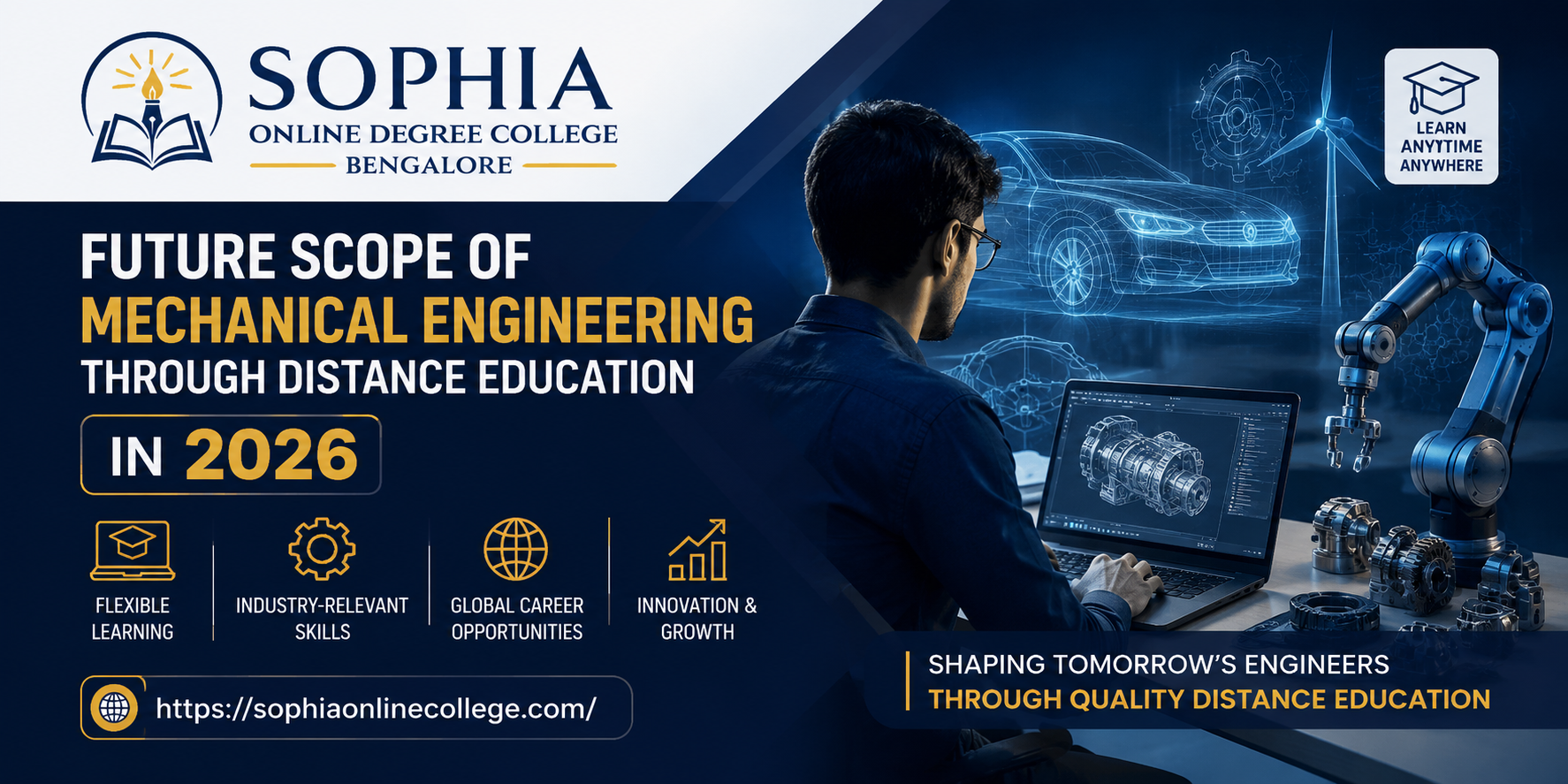
Future Scope of Mechanical Engineering is a topic that continues to attract students, diploma holders, and working professionals who want to build stable and rewarding careers in the engineering sector. Despite the rapid rise of artificial intelligence, software development, and digital technologies, Mechanical Engineering remains one of the strongest pillars of industrial growth. From manufacturing plants and automotive companies to renewable energy projects and aerospace industries, mechanical engineers continue to play a critical role in designing, developing, and maintaining essential systems.
As industries embrace automation, robotics, electric vehicles, and smart manufacturing, the demand for skilled engineers is evolving rather than disappearing. This transformation is creating new opportunities for learners pursuing qualifications through flexible learning pathways. Students exploring engineering education today are looking for programs that offer both academic credibility and convenience, making distance learning an attractive option.
In this guide, we’ll explore the future scope of Mechanical Engineering in 2026, industry demand, career opportunities, salary prospects, emerging trends, and how distance education can help students and professionals achieve their goals.
Understanding Mechanical Engineering in the Modern Era
Mechanical Engineering is one of the oldest and most versatile branches of engineering. It involves the design, development, production, and maintenance of machines, systems, and industrial equipment.
Mechanical engineers work across multiple industries including:
- Manufacturing
- Automotive
- Aerospace
- Robotics
- Renewable Energy
- Construction
- Heavy Engineering
- Oil and Gas
Today, Engineering distance education programs are helping learners gain industry-relevant knowledge while balancing work and personal commitments.
Why Mechanical Engineering Remains Relevant in 2026?
Many students wonder whether Mechanical Engineering still offers promising career opportunities. The answer is yes.
The world continues to rely on infrastructure, manufacturing, transportation systems, machinery, and energy solutions. Even advanced technologies such as robotics and automation require mechanical engineering expertise.
Key reasons for continued demand include:
- Expansion of smart manufacturing
- Growth of electric vehicles
- Industrial automation projects
- Renewable energy installations
- Infrastructure development
- Aerospace innovation
These sectors ensure a strong future for engineering graduates.
Why Students Choose Distance Education for Engineering Studies?
Distance learning has become increasingly popular among students who need flexibility.
Benefits include:
- Learn while working
- Cost-effective education
- Flexible schedules
- Career advancement opportunities
- Access to higher education from anywhere
Many learners pursuing distance education in bangalore choose engineering-related programs to upgrade their qualifications while maintaining professional responsibilities.
Mechanical Engineering Career Outlook in 2026
| Career Factor | Outlook |
| Industry Demand | High |
| Automation Integration | Very High |
| Manufacturing Growth | Strong |
| Government Opportunities | High |
| Salary Growth | Good |
| Long-Term Career Scope | Excellent |
The future outlook indicates that Mechanical Engineering will remain one of the most reliable career choices in India and globally.
Top Industries Hiring Mechanical Engineers
Manufacturing Industry
Manufacturing remains one of the largest employers of mechanical engineers. Modern factories increasingly use automated systems, requiring engineers to oversee operations and maintenance.
Automotive Industry
The shift toward electric vehicles is creating new opportunities for mechanical engineers specializing in design, production, and quality assurance.
Aerospace Industry
Aircraft manufacturing and space research organizations continue to seek highly skilled engineering professionals.
Renewable Energy Sector
Wind turbines, solar plants, and sustainable energy systems require mechanical engineering expertise.
Robotics and Automation
As businesses adopt Industry 4.0 technologies, mechanical engineers play an important role in developing automated systems and robotics solutions.
Career Opportunities After Mechanical Engineering
Graduates can pursue various career paths depending on their interests and specialization.
Popular Job Roles
- Mechanical Design Engineer
- Production Engineer
- Quality Control Engineer
- Maintenance Engineer
- HVAC Engineer
- Project Engineer
- Automation Engineer
- Robotics Engineer
- Manufacturing Engineer
- Plant Operations Engineer
Students graduating from a recognized B.Tech correspondence college in India can explore opportunities across these growing sectors.
Mechanical Engineering and Industry 4.0
Industry 4.0 is changing how factories operate.
Technologies driving this transformation include:
- Artificial Intelligence
- Internet of Things (IoT)
- Robotics
- Data Analytics
- Smart Manufacturing Systems
Mechanical engineers who understand these technologies will enjoy a significant competitive advantage in the job market.
Higher Education and Career Advancement
Many professionals pursue higher qualifications to enhance career growth.
Programs offered through an M.Tech correspondence college in Karnataka can help engineers deepen their technical expertise and qualify for advanced roles.
Benefits include:
- Better promotion opportunities
- Specialized technical knowledge
- Leadership roles
- Research opportunities
- Higher salary potential
Engineering Diplomas and Career Growth
Not every successful engineering career begins with a degree.
Students from a Diploma in Engr correspondence college in India often secure technical positions and later upgrade their qualifications through further education.
Diploma holders can work as:
- Technical Assistants
- Maintenance Supervisors
- Production Technicians
- Quality Inspectors
- CAD Operators
With experience and additional certifications, career growth remains substantial.
Mechanical Engineering Jobs and Future Growth
| Job Role | Growth Potential |
| Design Engineer | High |
| Production Engineer | High |
| Maintenance Engineer | Good |
| Automation Engineer | Excellent |
| Robotics Engineer | Excellent |
| Project Engineer | Very High |
| Manufacturing Engineer | High |
The growing adoption of automation and smart technologies is expected to increase demand for these roles over the next decade.
Government Job Opportunities for Mechanical Engineers
Mechanical engineers also have excellent opportunities in the public sector.
Popular government employers include:
- Indian Railways
- Public Sector Undertakings (PSUs)
- Defense Organizations
- State Government Departments
- Municipal Engineering Services
- Power Generation Companies
Government careers often provide job security, attractive benefits, and long-term stability.
Emerging Trends Shaping Mechanical Engineering Careers
Electric Vehicles (EVs)
The EV industry is creating new engineering roles in design, manufacturing, and maintenance.
Renewable Energy
Demand for engineers specializing in sustainable technologies continues to rise.
Robotics
Advanced robotics systems require mechanical expertise for development and implementation.
Smart Manufacturing
Factories increasingly rely on automation and intelligent systems.
Sustainable Engineering
Organizations are investing in environmentally friendly engineering solutions.
These trends indicate strong long-term opportunities for future engineers.
Distance Education and Career Flexibility
Many professionals prefer flexible learning options because they can continue earning while studying.
Compared to Traditional distance education in bangalore, modern distance learning platforms often provide improved digital resources, online support, and flexible study schedules.
This makes career advancement more accessible for working professionals.
Why Students Choose Sophia Online Degree?
Selecting the right educational partner can significantly influence career success.
Sophia Online Degree helps learners explore flexible educational opportunities aligned with industry needs and career aspirations.
Whether students are seeking foundational qualifications or advanced engineering education, Sophia Online Degree provides guidance and support throughout the learning journey.
As technology continues to reshape industries, Sophia Online Degree remains committed to helping students prepare for future-ready careers.
Conclusion
The Future Scope of Mechanical Engineering remains strong in 2026 and beyond. While industries continue to evolve through automation, artificial intelligence, and digital transformation, mechanical engineers remain essential to manufacturing, infrastructure, transportation, robotics, and renewable energy sectors.
Students pursuing qualifications through Engineering distance education programs can access valuable opportunities while balancing personal and professional commitments. Whether you begin with a diploma, a bachelor’s degree, or an advanced qualification, Mechanical Engineering offers excellent career stability, growth potential, and long-term relevance.
The key to success lies in continuously upgrading skills, embracing emerging technologies, and staying aligned with industry trends.
Looking to advance your engineering qualifications while managing work and personal commitments?
Connect with Sophia Online Degree and explore flexible learning opportunities designed to support your academic and professional growth.
Take the next step toward a future-ready engineering career today.
FAQs
1. Is Mechanical Engineering Still a Good Career Choice in 2026?
Yes, Mechanical Engineering continues to be one of the most reliable and versatile engineering disciplines in 2026. While technology-driven sectors such as artificial intelligence and software development are growing rapidly, industries still depend heavily on mechanical engineers to design, develop, maintain, and improve machines, production systems, and industrial processes. Sectors like manufacturing, renewable energy, electric vehicles, aerospace, robotics, and infrastructure development continue to generate strong demand for qualified professionals.
Students pursuing qualifications through Engineering distance education programs can build the technical knowledge needed to enter these industries while benefiting from flexible learning opportunities. Similarly, graduates from a recognized B.Tech correspondence college in India can access a wide range of technical and managerial roles across private and public sector organizations. As industries continue embracing automation and smart manufacturing technologies, mechanical engineers with updated skills will remain highly valuable in the job market.
2. Can Mechanical Engineers Get Jobs After Distance Education?
Yes, Mechanical Engineers can secure employment after completing qualifications through recognized distance learning institutions. Today’s employers focus more on practical skills, technical competence, certifications, and industry knowledge rather than the mode of education alone. As long as the qualification comes from a recognized institution and the candidate possesses relevant technical expertise, distance education graduates can compete effectively in the job market.
Many students choose distance education in bangalore because it allows them to gain qualifications while working or managing personal responsibilities. Likewise, learners enrolled in Engineering distance education programs often use the flexibility of their studies to gain practical experience, internships, or industry certifications. Combining academic qualifications with hands-on skills can significantly improve employability and open doors to rewarding engineering careers.
3. Which Industries Hire Mechanical Engineers the Most?
Mechanical Engineers enjoy opportunities across a broad range of industries because their skills are applicable to many sectors. Manufacturing remains one of the largest employers, followed by automotive, aerospace, construction, oil and gas, renewable energy, heavy engineering, and industrial automation. As businesses invest in advanced machinery and production systems, the demand for mechanical engineering expertise continues to rise.
Students graduating from a B.Tech correspondence college in India often find opportunities in production, quality control, design engineering, and project management roles. Additionally, professionals who pursue advanced qualifications through an M.Tech correspondence college in Karnataka can access specialized positions in research, product development, and industrial innovation. The diversity of industries hiring mechanical engineers makes it one of the most flexible career paths available.
4. What Is the Future Scope of Mechanical Engineering?
The future scope of Mechanical Engineering remains highly promising due to rapid technological advancements and industrial growth. Mechanical engineers are increasingly involved in areas such as electric vehicles, renewable energy systems, smart factories, automation technologies, robotics, and sustainable engineering solutions. Rather than replacing engineers, modern technologies are creating new opportunities that require a combination of traditional engineering knowledge and digital skills.
Learners pursuing Engineering distance education programs can prepare themselves for these emerging opportunities by developing expertise in automation, CAD software, robotics, and industrial technologies. Similarly, students participating in Traditional distance education in bangalore programs can continue their education while adapting to evolving industry requirements. The profession offers excellent long-term growth potential for individuals willing to embrace innovation and continuous learning.
5. Can Diploma Holders Build Successful Engineering Careers?
Absolutely. Many successful engineering professionals begin their careers with diploma qualifications before advancing through experience, certifications, and higher education. Diploma programs focus heavily on practical skills and technical knowledge, making graduates attractive to employers seeking job-ready candidates. Over time, diploma holders can progress into supervisory, technical, and managerial positions.
Students graduating from a Diploma in Engr correspondence college in India often secure entry-level opportunities in manufacturing, maintenance, quality assurance, and production operations. Later, many choose to continue their education through Engineering distance education programs to improve their qualifications and career prospects. With dedication, skill development, and industry experience, diploma holders can build highly successful and rewarding engineering careers.
6. Is M.Tech Useful for Career Growth?
Yes, pursuing an M.Tech can significantly enhance career growth for engineering professionals. An M.Tech program provides advanced technical knowledge, specialization opportunities, research exposure, and leadership skills that can help professionals qualify for higher-level positions. Many organizations prefer candidates with postgraduate qualifications for senior technical and management roles.
Professionals studying through an M.Tech correspondence college in Karnataka can upgrade their expertise without leaving their jobs, making it a practical option for working engineers. Additionally, graduates who have completed a B.Tech correspondence college in India often pursue M.Tech programs to deepen their knowledge in specialized areas such as design engineering, manufacturing systems, robotics, or automation. This combination can improve promotion prospects and increase earning potential over the long term.
7. Are Government Jobs Available for Mechanical Engineers?
Yes, government organizations offer numerous career opportunities for Mechanical Engineers across various sectors. Public Sector Undertakings (PSUs), Indian Railways, defense organizations, energy companies, municipal engineering departments, and infrastructure agencies regularly recruit mechanical engineering professionals. These positions often provide job security, attractive benefits, and long-term career stability.
Candidates who complete recognized Engineering distance education programs may be eligible for many government recruitment opportunities, provided they meet the specific eligibility requirements outlined in official notifications. Similarly, graduates from a Diploma in Engr correspondence college in India can apply for technical and supervisory positions in several government departments. Aspiring candidates should carefully review recruitment guidelines and examination criteria before applying.
8. What Skills Should Mechanical Engineers Learn in 2026?
To remain competitive in 2026, Mechanical Engineers must combine traditional engineering knowledge with modern technological skills. Employers increasingly seek professionals who understand automation, robotics, computer-aided design (CAD), industrial IoT, data analysis, project management, and smart manufacturing systems. Strong communication and problem-solving abilities are also essential for career advancement.
Students pursuing distance education in bangalore can use the flexibility of their programs to develop these in-demand skills through certifications and practical training. Likewise, learners enrolled in M.Tech correspondence college in Karnataka programs often gain exposure to advanced technologies that are shaping the future of engineering. Engineers who continuously update their skills and adapt to industry changes will be better positioned for long-term success in a rapidly evolving job market.