
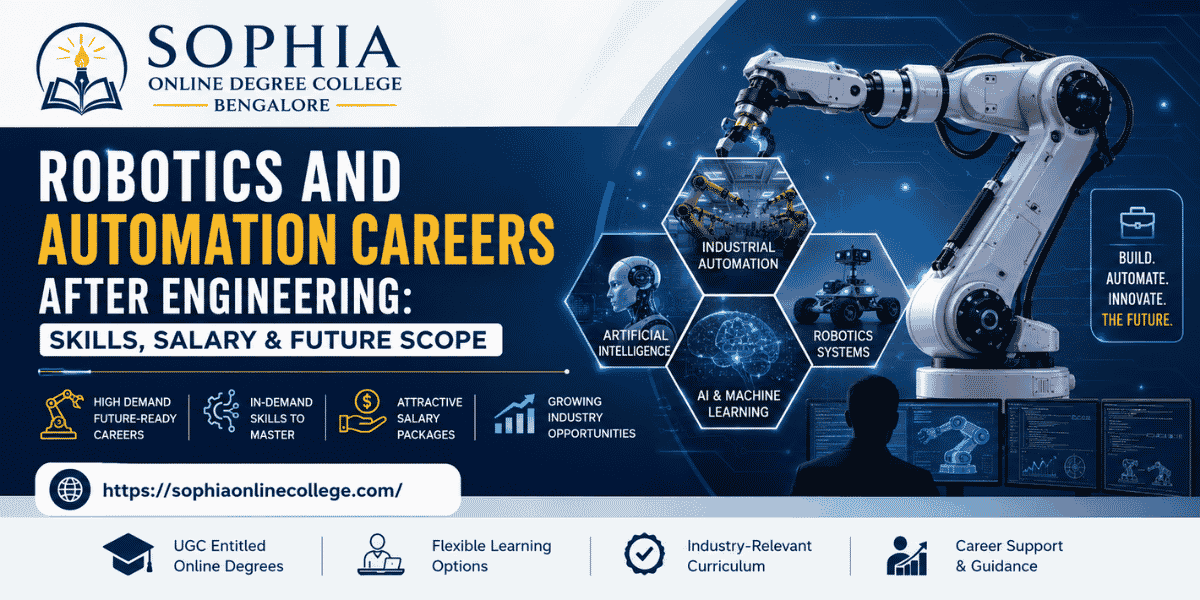
Robotics and Automation Careers are rapidly emerging as some of the most exciting and future-focused career options for engineering graduates in 2026. From smart factories and autonomous vehicles to AI-powered machines and intelligent manufacturing systems, Robotics and Automation Careers are transforming industries across the globe. Companies are investing heavily in automation technologies to improve productivity, reduce operational costs, and enhance innovation.
The growing adoption of Industry 4.0, Artificial Intelligence, Internet of Things (IoT), and machine learning has significantly increased the demand for professionals skilled in robotics and automation. As a result, Robotics and Automation Careers now offer excellent salary packages, global job opportunities, and long-term career stability. Whether you are a recent engineering graduate or a working professional looking to upskill, entering the field of Robotics and Automation Careers can open the door to a rewarding and future-ready profession.
Why Robotics and Automation Are Booming in 2026?
The demand for Robotics and Automation Careers continues to grow because businesses are increasingly adopting intelligent technologies to stay competitive.
Key growth drivers include:
- Industry 4.0 transformation
- AI-powered automation
- Smart manufacturing initiatives
- Autonomous systems development
- Digital transformation across industries
- Increased demand for operational efficiency
As organizations continue integrating advanced technologies into their operations, professionals with expertise in Robotics and Automation Careers are becoming essential assets.
Robotics vs Automation: Understanding the Difference
| Aspect | Robotics | Automation |
| Definition | Machines designed to perform tasks | Systems that automate processes |
| Main Objective | Physical task execution | Process efficiency |
| Technologies | AI, Sensors, Robotics | PLC, Software, Control Systems |
| Applications | Manufacturing, Healthcare | Logistics, Banking, Production |
| Career Roles | Robotics Engineer | Automation Engineer |
Although often used together, robotics focuses on intelligent machines, while automation focuses on streamlining workflows and operations.
Why Engineering Graduates Have an Advantage?
Engineering graduates possess many of the core skills required for Robotics and Automation Careers, including:
- Problem-solving abilities
- Programming fundamentals
- Electronics and circuitry knowledge
- Mechanical systems understanding
- Analytical thinking
Students pursuing Engineering distance education programs can also build strong foundations for robotics careers through technical projects and certifications.
Likewise, graduates from a B.Tech correspondence college in India can strengthen their technical skills by learning robotics software, automation systems, and industrial technologies.
Top Robotics and Automation Careers in 2026
1. Robotics Engineer
Robotics Engineers design, develop, and test robotic systems used across manufacturing, healthcare, defense, and logistics industries.
2. Automation Engineer
Automation Engineers create systems that automate industrial processes and improve operational efficiency.
3. Robotics Software Developer
These professionals develop software applications that control robots and intelligent machines.
4. AI Robotics Engineer
AI Robotics Engineers combine Artificial Intelligence with robotics to build intelligent systems capable of learning and adapting.
5. Control Systems Engineer
Control Systems Engineers develop monitoring and control solutions used in industrial automation environments.
6. Embedded Systems Engineer
These professionals create hardware-software integrations used in robotics devices and smart systems.
7. Industrial Automation Specialist
Industrial Automation Specialists optimize production lines and manufacturing systems through advanced automation technologies.
8. Autonomous Vehicle Engineer
These engineers contribute to the development of self-driving cars, drones, and intelligent transportation systems.
The demand for these Robotics and Automation Careers is expected to continue growing as organizations invest in intelligent technologies.
Essential Skills Required for Robotics and Automation Careers
Technical Skills
- Python Programming
- C++
- Robotics Operating System (ROS)
- Machine Learning Fundamentals
- PLC Programming
- Embedded Systems
- IoT Technologies
- Cloud Computing
- Sensor Integration
- Control Systems
Soft Skills
- Communication
- Teamwork
- Critical Thinking
- Adaptability
- Project Management
Students enrolled in IT distance education programs can build these skills through certifications, practical projects, and online learning platforms.
Educational Pathways for Robotics Professionals
Several educational pathways can help students enter Robotics and Automation Careers.
Bachelor’s Degree
Engineering disciplines such as Mechanical Engineering, Electronics Engineering, Electrical Engineering, Computer Science, and Mechatronics provide excellent foundations.
Master’s Degree
Students seeking specialization may pursue advanced studies through an M.Tech correspondence college in Karnataka, focusing on robotics, automation, AI, and intelligent systems.
Diploma Programs
Many learners begin their technical journey through a Diploma in Engr correspondence college in India, gaining practical engineering knowledge before moving into robotics specializations.
Certifications
Recommended certifications include:
- Robotics Process Automation (RPA)
- Siemens Automation Certification
- AWS Cloud Practitioner
- Microsoft Azure Fundamentals
- PLC Programming Certifications
- Industrial Automation Certifications
Salary Expectations in Robotics and Automation Careers
| Job Role | Entry-Level Salary | Mid-Level Salary | Senior-Level Salary |
| Robotics Engineer | ₹5–8 LPA | ₹10–15 LPA | ₹20–30 LPA |
| Automation Engineer | ₹4–7 LPA | ₹9–14 LPA | ₹18–28 LPA |
| AI Robotics Engineer | ₹8–12 LPA | ₹15–25 LPA | ₹30–50 LPA |
| Control Systems Engineer | ₹5–8 LPA | ₹10–16 LPA | ₹20–30 LPA |
| Robotics Software Developer | ₹6–10 LPA | ₹12–20 LPA | ₹25–40 LPA |
These figures may vary depending on location, certifications, industry, and experience level.
Industries Hiring Robotics and Automation Professionals
One of the biggest advantages of pursuing Robotics and Automation Careers is the wide range of industries actively recruiting skilled professionals. As businesses embrace digital transformation and smart technologies, the demand for robotics experts continues to increase.
Manufacturing
Modern factories use robots for assembly, quality inspection, packaging, and material handling. Automation helps improve productivity while reducing human error.
Automotive
Automobile companies rely on robotic systems for vehicle assembly, welding, painting, and testing. Autonomous vehicle development is also creating new opportunities.
Healthcare
Robotic-assisted surgeries, patient monitoring systems, and automated healthcare solutions are revolutionizing the medical sector.
Logistics and Warehousing
E-commerce companies use robotics for inventory management, warehouse automation, and automated delivery systems.
Aerospace and Defense
Robotics plays a critical role in aircraft manufacturing, defense systems, and unmanned vehicles.
Technology and IT
Software companies increasingly integrate robotics, AI, and automation solutions into their products and services.
As these industries continue expanding, Robotics and Automation Careers are expected to remain among the most sought-after technology professions.
Future Scope of Robotics and Automation in 2026 and Beyond
The future of Robotics and Automation Careers looks exceptionally promising. Organizations worldwide are investing in intelligent systems to improve productivity, reduce operational costs, and gain competitive advantages.
Key trends shaping the future include:
- Artificial Intelligence-powered robotics
- Smart factories and Industry 4.0
- Autonomous vehicles and drones
- Human-robot collaboration
- Predictive maintenance systems
- Robotics in healthcare
- Intelligent logistics and supply chains
According to industry forecasts, millions of new jobs related to robotics, automation, AI, and intelligent systems will emerge over the next decade. This makes Robotics and Automation Careers one of the most future-proof career options available today.
Can Distance Education Students Build Robotics Careers?
Absolutely. Modern employers increasingly focus on practical skills, technical expertise, certifications, and project experience rather than the mode of education.
Students pursuing distance education in bangalore can successfully prepare for robotics careers by:
- Learning programming languages
- Building robotics projects
- Completing automation certifications
- Participating in internships
- Developing strong technical portfolios
Many professionals working in robotics today have strengthened their skills through online learning and industry certifications.
Whether you study through traditional programs or flexible learning models, dedication and continuous learning remain the keys to success in Robotics and Automation Careers.
Why Choose Sophia Online College for Future-Ready Technical Education?
As technology evolves rapidly, students need educational pathways that support both academic growth and industry readiness.
Sophia Online College helps learners access flexible educational opportunities that align with modern industry demands. Students can pursue higher education while developing practical skills in emerging fields such as robotics, automation, Artificial Intelligence, cloud computing, and software development.
The flexibility offered by Sophia Online College allows learners to balance education, work, and skill development while preparing for future career opportunities.
Step-by-Step Roadmap to Build a Robotics Career
If you are serious about entering Robotics and Automation Careers, follow this practical roadmap:
Step 1: Build a Strong Engineering Foundation
Complete your engineering degree and strengthen your understanding of mathematics, programming, electronics, and mechanical systems.
Step 2: Learn Programming
Focus on Python, C++, and robotics-related software development.
Step 3: Understand Automation Technologies
Study PLC programming, industrial automation systems, IoT, and control systems.
Step 4: Work on Projects
Create robotics prototypes, automation systems, or AI-integrated applications.
Step 5: Earn Industry Certifications
Certifications demonstrate practical skills and improve employability.
Step 6: Gain Hands-On Experience
Internships and real-world projects help bridge the gap between theory and practice.
Step 7: Build a Portfolio
Showcase projects, technical skills, certifications, and achievements.
Step 8: Apply for Industry Roles
Target positions aligned with your skills and interests within the robotics ecosystem.
Following this roadmap can significantly improve your chances of success in Robotics and Automation Careers.
How Emerging Technologies Are Expanding Robotics Opportunities?
Several advanced technologies are accelerating growth within robotics and automation:
Artificial Intelligence
AI enables robots to learn, adapt, and make decisions independently.
Internet of Things (IoT)
Connected devices allow robotic systems to communicate and operate intelligently.
Cloud Computing
Cloud-based robotics improves scalability, data processing, and remote operations.
Machine Learning
Machine learning helps robots improve performance through continuous learning.
Digital Twins
Virtual simulations help organizations optimize robotic systems before deployment.
Professionals who understand these technologies will have a significant advantage in the evolving job market.
Conclusion
The future of Robotics and Automation Careers has never looked brighter. As industries continue investing in smart technologies, automation systems, and intelligent machines, demand for skilled professionals will continue to rise across the globe. Engineering graduates who develop expertise in programming, robotics, AI, automation, and emerging technologies can access exciting career opportunities with excellent salary potential and long-term growth.
Whether you are pursuing a degree through traditional education, Engineering distance education, a B.Tech correspondence college in India, or an M.Tech correspondence college in Karnataka, building technical skills and practical experience can help you succeed in this rapidly growing field.
For students seeking flexible and career-focused educational opportunities, Sophia Online College provides pathways that support professional growth and future-ready learning. As industries embrace automation and innovation, now is the perfect time to explore Robotics and Automation Careers and prepare for the opportunities of 2026 and beyond.
Ready to prepare for the next generation of technology careers?
Sophia Online College offers flexible educational opportunities designed to help students and working professionals achieve their academic and career goals. Whether you’re interested in engineering, technology, automation, or advanced technical education, the right learning pathway can help you unlock exciting opportunities in the future workforce.
Contact Sophia Online College today and take the first step toward a successful career in Robotics and Automation.
FAQs
1. Is robotics a good career after engineering?
Yes, robotics is considered one of the most promising technology careers for engineering graduates in 2026 and beyond. The increasing adoption of automation, Artificial Intelligence, smart manufacturing, and Industry 4.0 technologies has created significant demand for robotics professionals across various industries. Robotics engineers work on designing, developing, testing, and maintaining intelligent systems that improve productivity and operational efficiency. Career opportunities exist in manufacturing, healthcare, aerospace, logistics, defense, and technology sectors. Students pursuing Engineering distance education can also prepare for robotics careers by building practical skills, earning certifications, and gaining hands-on project experience. With strong salary potential and future growth prospects, robotics remains an excellent career choice.
2. What skills are required for Robotics and Automation Careers?
Success in Robotics and Automation Careers requires a combination of technical expertise and professional skills. Key technical skills include programming languages such as Python and C++, robotics software development, PLC programming, Artificial Intelligence, machine learning, embedded systems, IoT technologies, and control systems. Knowledge of sensors, cloud computing, and industrial automation platforms is also highly valuable. In addition to technical abilities, employers look for strong problem-solving, communication, teamwork, and analytical thinking skills. As robotics technology continues evolving, professionals must stay updated with emerging trends and continuously improve their knowledge. Developing both technical and soft skills significantly improves career opportunities in robotics and automation.
3. Which engineering branch is best for robotics?
Several engineering disciplines provide strong foundations for robotics careers, including Mechanical Engineering, Electronics and Communication Engineering, Electrical Engineering, Mechatronics Engineering, and Computer Science Engineering. Each branch contributes unique skills that are valuable in robotics development. Mechanical engineers focus on robot design and movement, while electronics engineers work on sensors and control systems. Computer Science graduates contribute through programming and AI development. Students pursuing a B.Tech correspondence college in India program can also build robotics expertise by learning programming, automation technologies, and machine learning concepts. Ultimately, the best engineering branch depends on individual interests and the specific area of robotics a student wishes to pursue.
4. Can distance education students work in robotics?
Absolutely. Modern employers increasingly prioritize technical skills, certifications, project experience, and practical knowledge over the mode of education. Students enrolled in distance education in bangalore programs can successfully build robotics careers by gaining hands-on experience through projects, online labs, certifications, and internships. Robotics is a skill-driven industry where employers evaluate a candidate’s ability to solve real-world engineering challenges. Distance learners can strengthen their profiles by learning programming languages, automation tools, robotics software, and AI technologies. By combining academic qualifications with practical expertise and continuous learning, distance education students can compete effectively for robotics and automation roles in the technology sector.
5. What certifications help robotics professionals?
Certifications play an important role in helping robotics professionals validate their technical skills and improve employability. Popular certifications include Robotics Process Automation (RPA), Siemens Automation Certification, AWS Cloud Practitioner, Microsoft Azure Fundamentals, PLC Programming Certifications, and Industrial Automation programs. These certifications provide practical knowledge of robotics systems, automation technologies, cloud platforms, and intelligent process management. Students pursuing IT distance education can use certifications to complement their academic learning and gain industry-relevant expertise. Certifications also demonstrate commitment to continuous professional development, which employers highly value. When combined with practical projects and technical experience, certifications can significantly strengthen a robotics professional’s career prospects.
6. What is the average salary of a Robotics Engineer in India?
Robotics Engineers are among the highest-paid professionals in the engineering and technology sectors. Entry-level Robotics Engineers typically earn between ₹5–8 LPA, depending on their skills, certifications, and employer. Mid-level professionals with several years of experience often earn between ₹10–20 LPA, while senior specialists and robotics architects may earn ₹25 LPA or more. Salary levels vary based on industry, location, technical expertise, and project responsibilities. Students graduating from an M.Tech correspondence college in Karnataka often enhance their earning potential by specializing in robotics, automation, Artificial Intelligence, and advanced engineering technologies. As demand continues increasing, salary growth in robotics is expected to remain strong.
7. Is automation a future-proof career in 2026?
Yes, automation is widely considered a future-proof career because businesses across industries are increasingly adopting automated systems to improve efficiency, reduce costs, and enhance productivity. Technologies such as Artificial Intelligence, robotics, machine learning, and Industrial IoT continue to drive automation growth worldwide. As organizations invest in digital transformation initiatives, the demand for automation professionals is expected to rise significantly. Students pursuing a Diploma in Engr correspondence college in India can develop foundational engineering knowledge that supports careers in automation technologies. With industries continuously seeking innovative ways to optimize operations, automation professionals will remain highly valuable in the workforce for many years.
8. What industries hire automation engineers the most?
Automation Engineers are employed across a wide range of industries because automation technologies are becoming essential for operational efficiency and innovation. Manufacturing companies use automation for smart factories and production systems, while automotive firms rely on automated assembly lines and robotics. Healthcare organizations implement automation for diagnostics and patient management. Logistics, e-commerce, aerospace, energy, telecommunications, and technology sectors also actively recruit automation professionals. Students pursuing Engineering distance education programs often find opportunities in these industries by developing expertise in automation tools, robotics systems, and control technologies. As digital transformation accelerates globally, automation engineers continue to enjoy diverse and growing career opportunities across multiple sectors.